I think Palermo gets a bad rap.
It’s a gritty, noisy city, similar to more than a few other cities I have visited. This was the first time I’d been to Palermo and, after two days, my verdict is it’s a great city! I read that it has undergone a few decades of self-improvement. Well, it’s paid off. I found it tourist-friendly with pedestrian-only streets, a park along the sea full of joggers and walkers, a colorful street food scene, loud vivacious markets and, of course, fantastic art.
Is it still rough around the edges? Yes. But it’s a vibrant city and I’d like to go back and explore more of it.
My friend Paola and I arrived in Palermo after a three-hour boat ride from the island of Salina. Three hours was plenty of time, I thought, to look at the map, write down the directions, step by step, to our B-n-B.
I’d been messaging with the owner, Filippo, who made it sound like their place – Casa degli Artisti – was easy to get to from the port. We could walk since, “It’s just 300 meters or so” or we could take a bus that drops us right in front. Sounded easy enough.
Despite my diligent effort of writing down the directions in my notebook, Poala and I stood there at the port, with its confusing layout, not really sure how to exit. There was a roundabout and what looked like a major street on the other side so we headed that way. I looked at my notes and the GPS map. Yes, this was correct.
Then we took an incorrect exit – we’re on foot, remember – and we started walking in the wrong direction. It was so hot, we were on a busy street and I sent for the cavalry. Filippo came and picked us up at a bus stop.
On the way to the Casa, I started wondering, “at what point did this guy think this was an easy walk?” He drove around a big park, around a marina, took a few turns down some side streets before finally arriving at his building.
Casa degli Artisti is inside a palazzo, on the second floor. There are three or four rooms and we all have breakfast together in their kitchen. It really was like being guests in their home. It reminded me of some of the BnB’s I stayed in when I first went to Rome in 1986. It’s an old building, big courtyard inside, wide stone steps, big heavy doors and a tiny elevator.
We had a big room with a small balcony. Paola and I cooled off for about an hour and then we headed out. First stop: the opera house, Teatro Massimo, and then a street food tour.
Once we started walking, I saw that we were staying about three blocks from the train station. In all my years of going to Italy, one of my steadfast rules is never stay close to the train station in any city. The neighborhoods are sketchy and loud at night.
Something else struck me as we walked: every shop and food joint we passed was either Indian, Chinese or Korean. I did not see one place for a slice of pizza or even arancine, Palermo’s famous fried rice balls. It took about 20 minutes until we finally made it to the main street, Via Maqueda, and then the atmosphere changed. There were still souvenir shops with hundreds of refrigerator magnets, postcards and myriad other tchotchkes for sale but then we started seeing the bars and osterias with tables outside on the street.
CHAPEL OF SAN CATALDO
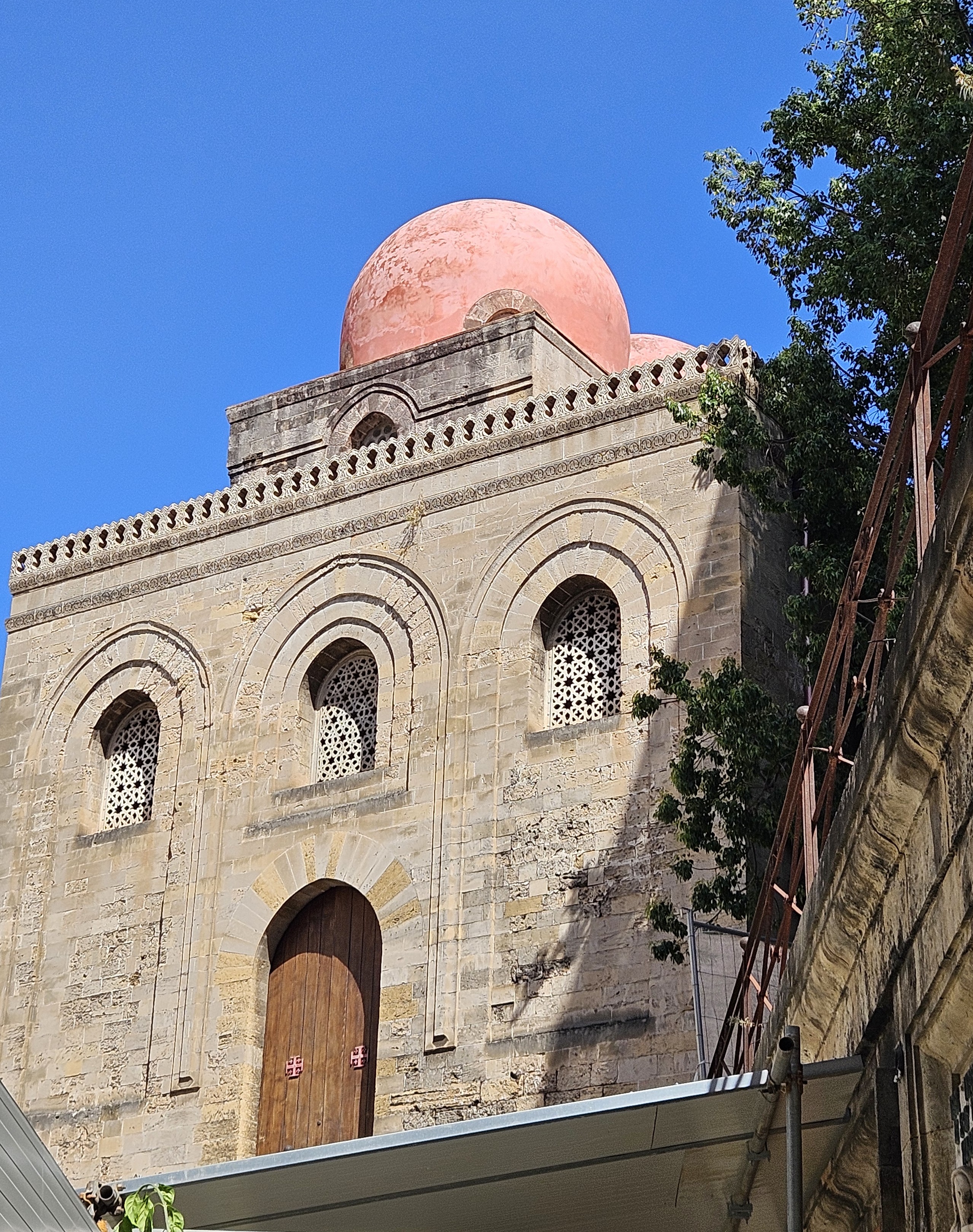
We stopped for a quick lunch and then visited our first Palermo church, the Chapel of San Cataldo, with its three red domes on top, symbols of its Arab-Norman influence and architecture. The interior is plain, supposedly because the founder of the church, an admiral named Maio of Bari, was assassinated in the same year he founded the church, 1160. But the mosaic floor was intact and is in its original form.



FOUNTAIN PRETORIA
We continued on Via Maqueda and then came upon the Fountain Pretoria, which is nicknamed the Fountain of “Vergogna” or shame. The reason? It is adorned with nude statues of mythical figures in the middle of a piazza surrounded by churches.
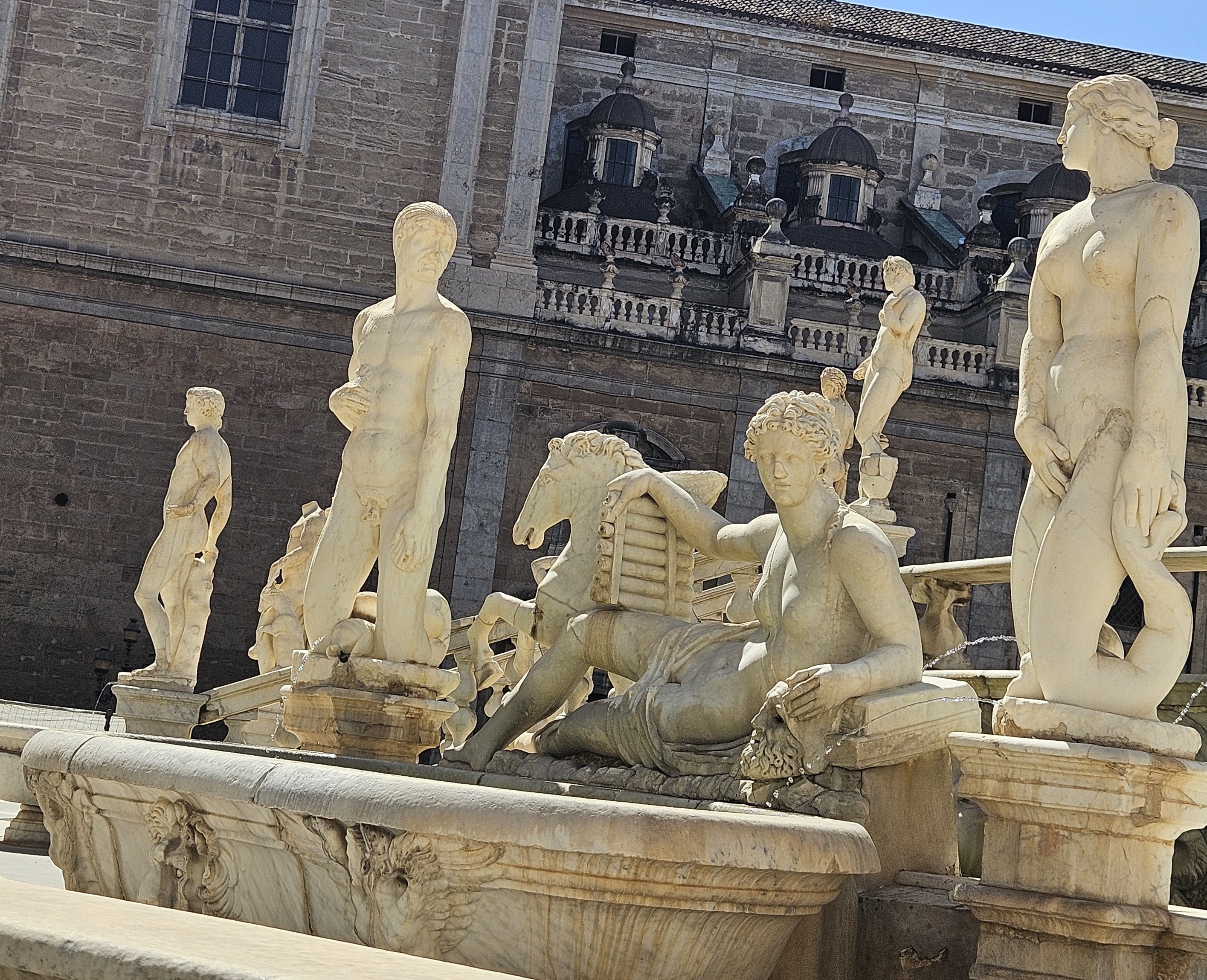
The fountain was originally sculpted for a villa in Florence in the 1550s. It was sold to Palermo, disassembled, shipped and reassembled in the piazza in 1574. The nude statues caused a bit of a scandal with the locals.


QUATTRO CANTI
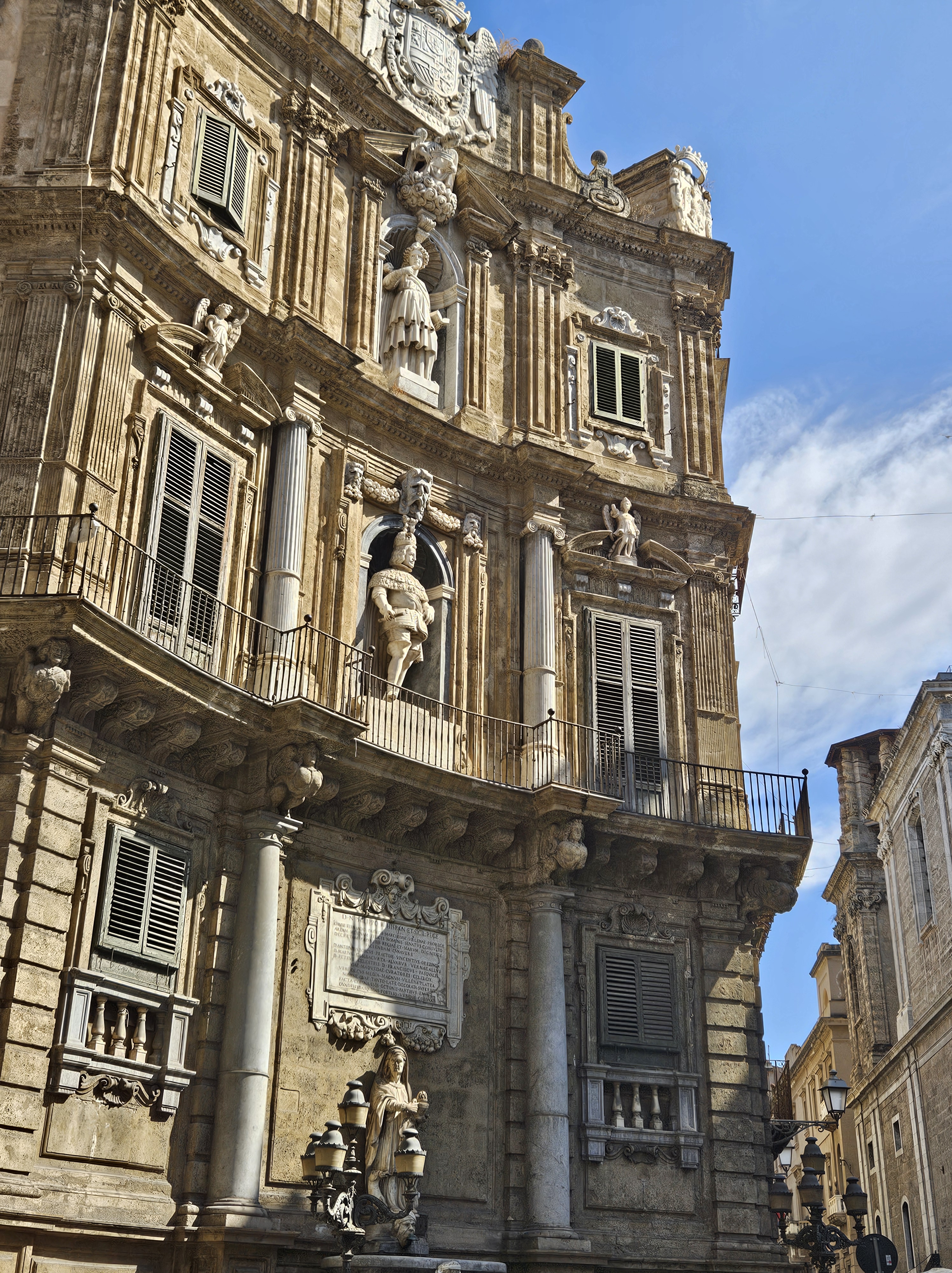
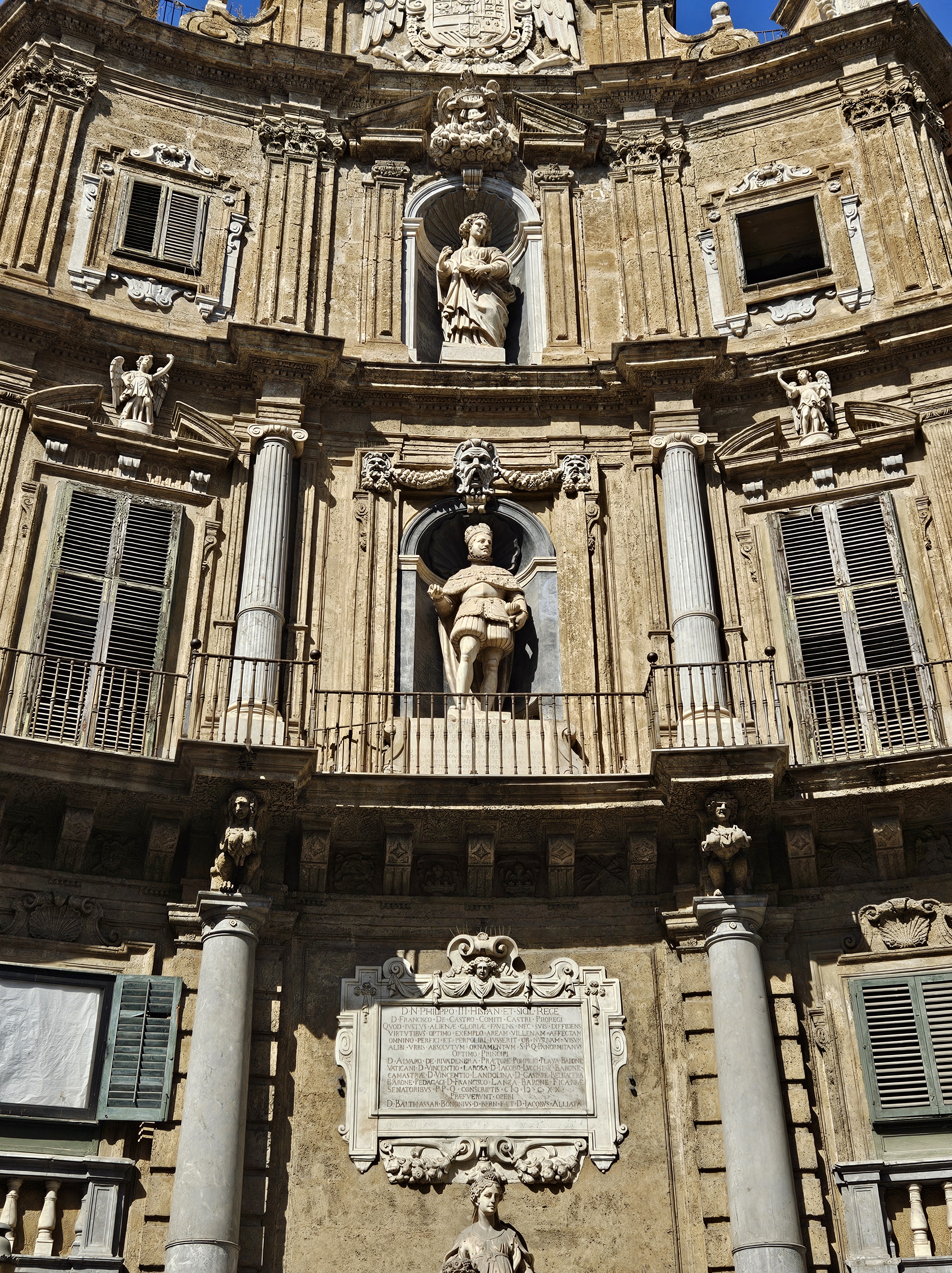
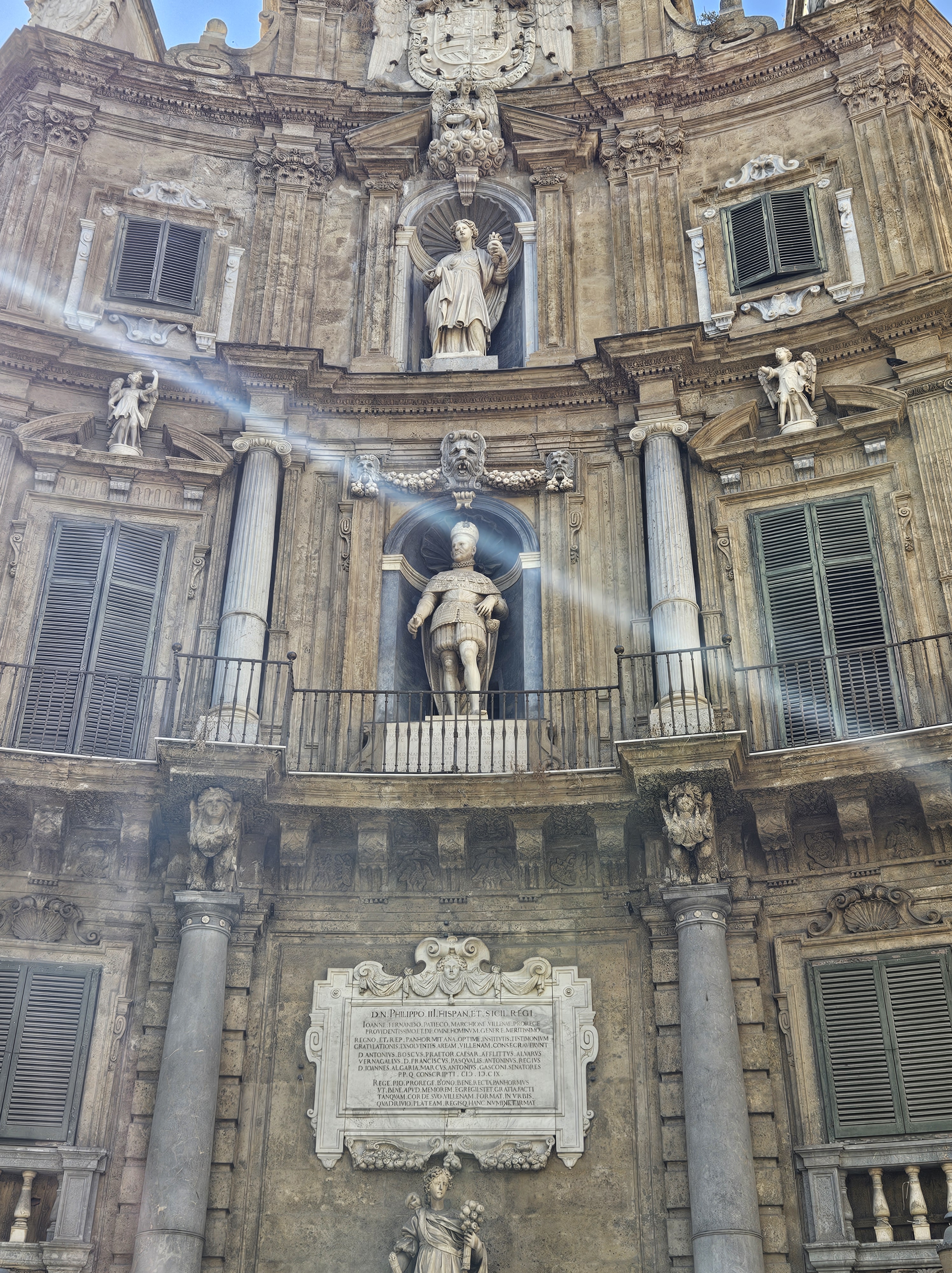
Moving along we were quickly in the middle of another famous piazza in Palermo, the Quattro Canti, at the intersection of Via Maqueda and Corso Vittorio Emanuele. The piazza is rounded, shaped by the concave facades of the four corner buildings. Each has a fountain, a statue depicting one of the four seasons, a statue of one of the Spanish kings and, on top, a patron saint of Palermo. The intersection divides the city into four districts.
There was a lot going on in that piazza. Someone was singing, there was a fancy car for show and everyone was trying to get photos in front of all four of the buildings, me included.

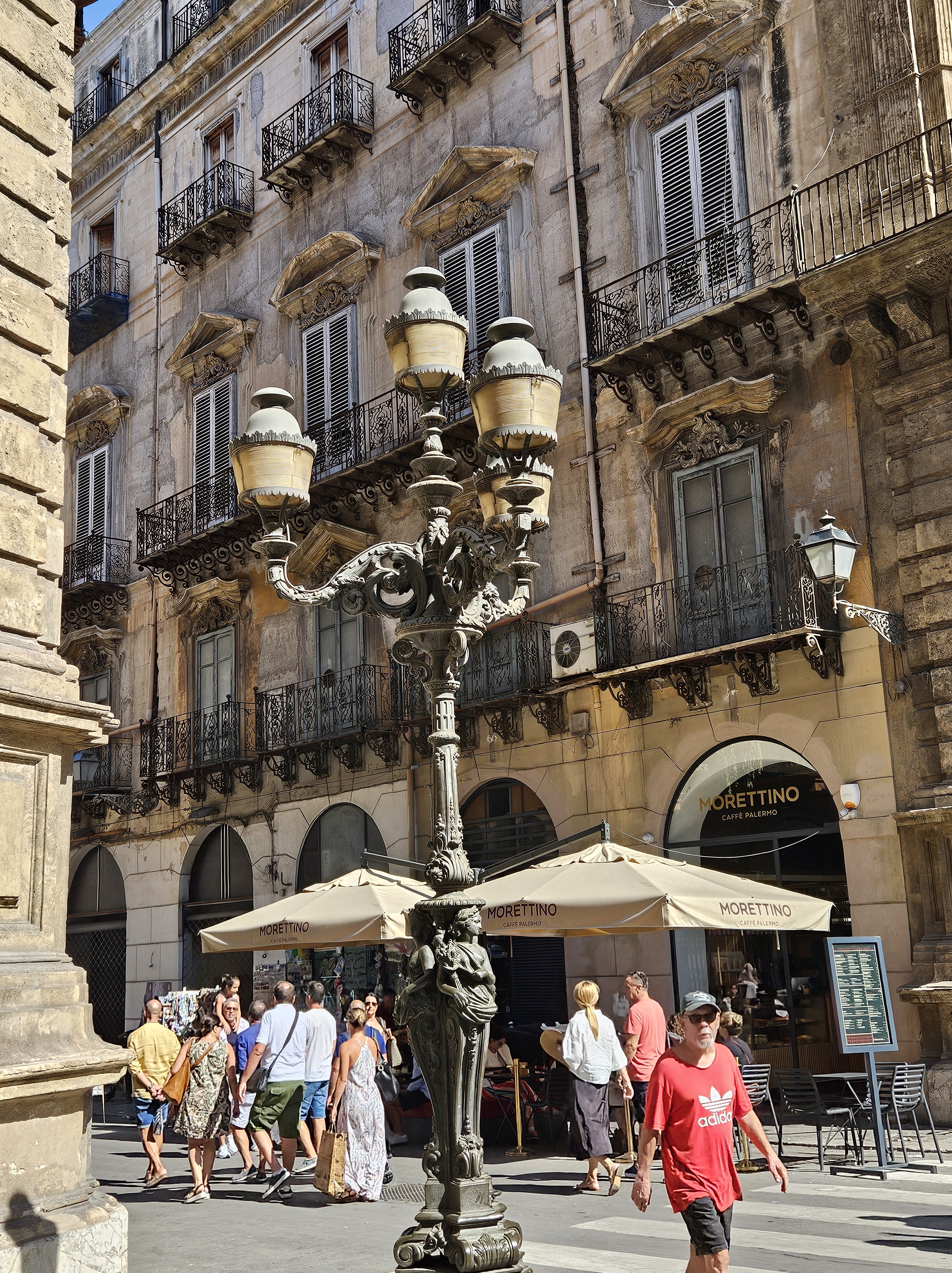
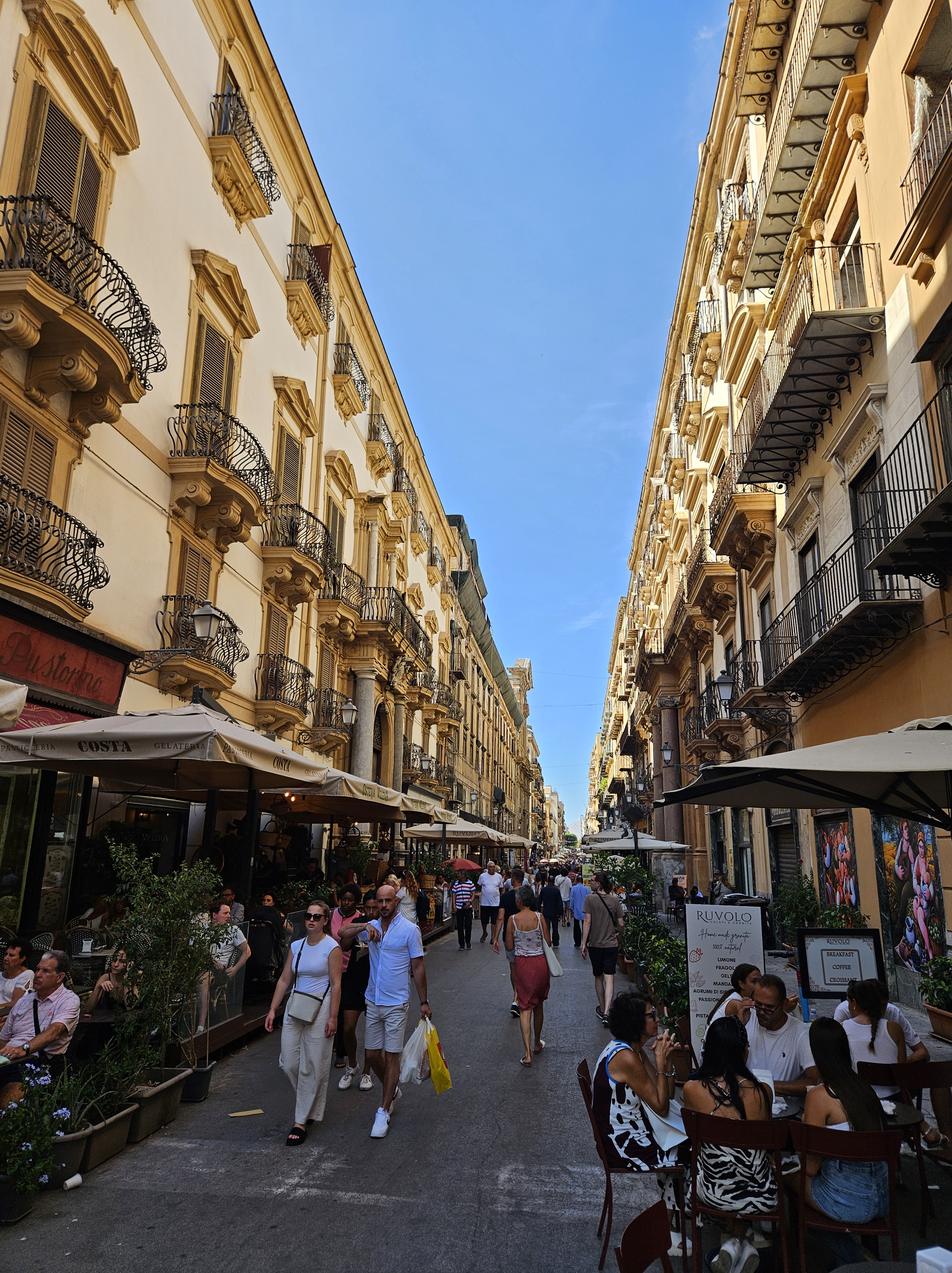
We continued on Via Maqueda and it was crowded! Every restaurant and bar had tables outside and it was such a scene, and the polar opposite of what we’d just come from on the island of Salina.
TEATRO MASSIMO
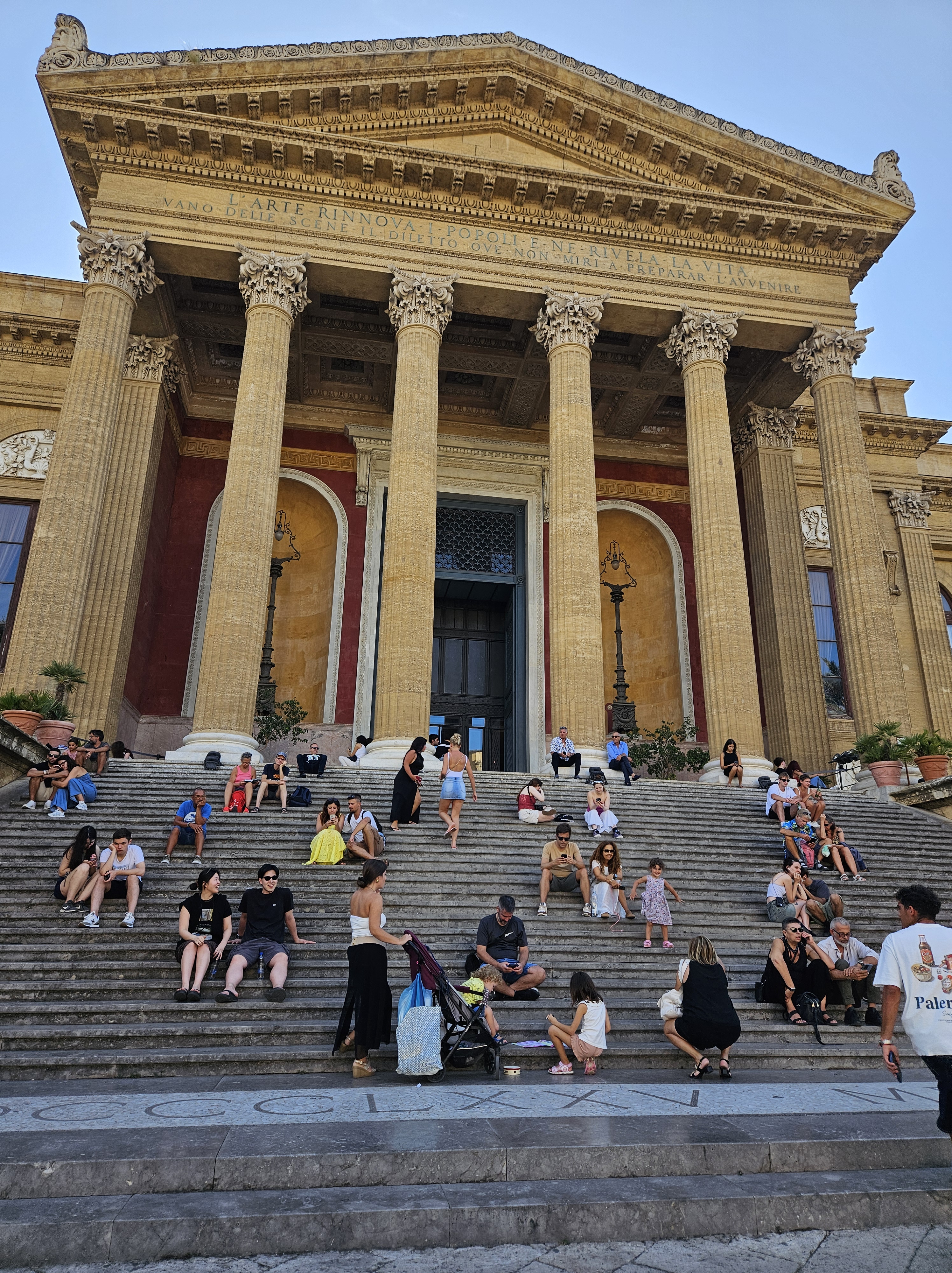
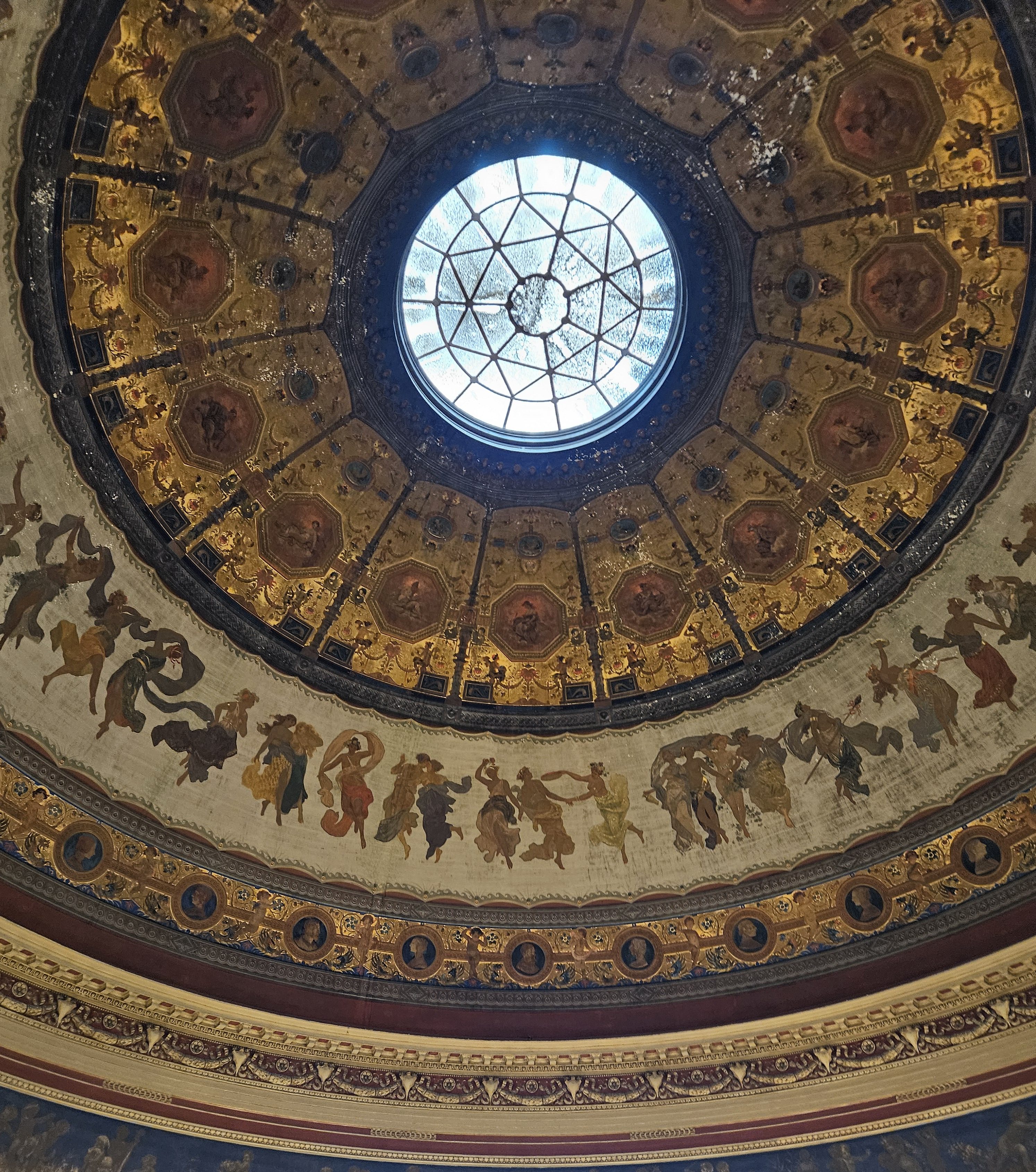
Finally, after a few blocks, we arrived at the opera house, the Teatro Massimo. It is the largest in Italy and the third largest in Europe. Fun fact: the front steps were the location of the penultimate scene in “The Godfather III.”



After the opera house, we walked back through the madness of Via Maqueda and met our guide and group for the evening food tour. Palermo is famous for its street food. I booked this tour several months before the trip, which I highly recommend if you’re discovering a new city.
STREET FOOD TOUR
There were about twelve of us, all Americans. They were from New York City and two were from Los Angeles. And I didn’t write down anybody’s names. Just know that we were all up for the adventure that awaited us and we had a lot of fun.
The first place we went was back to the Fountain Pretoria, to a pastry shop housed inside a convent, the Monastery of Santa Caterina d’Alessadria, to get some cannoli. Correct. We started the tour with dessert. Lorenzo explained that if we waited until the end, the tour started at 5 p.m., the shop would be closed and this place served the best cannoli in the city. We waited in the courtyard and then Lorenzo walks out with the platter of these big, wonderfully sweet and creamy Sicilian treasures. And oh were they delicious.

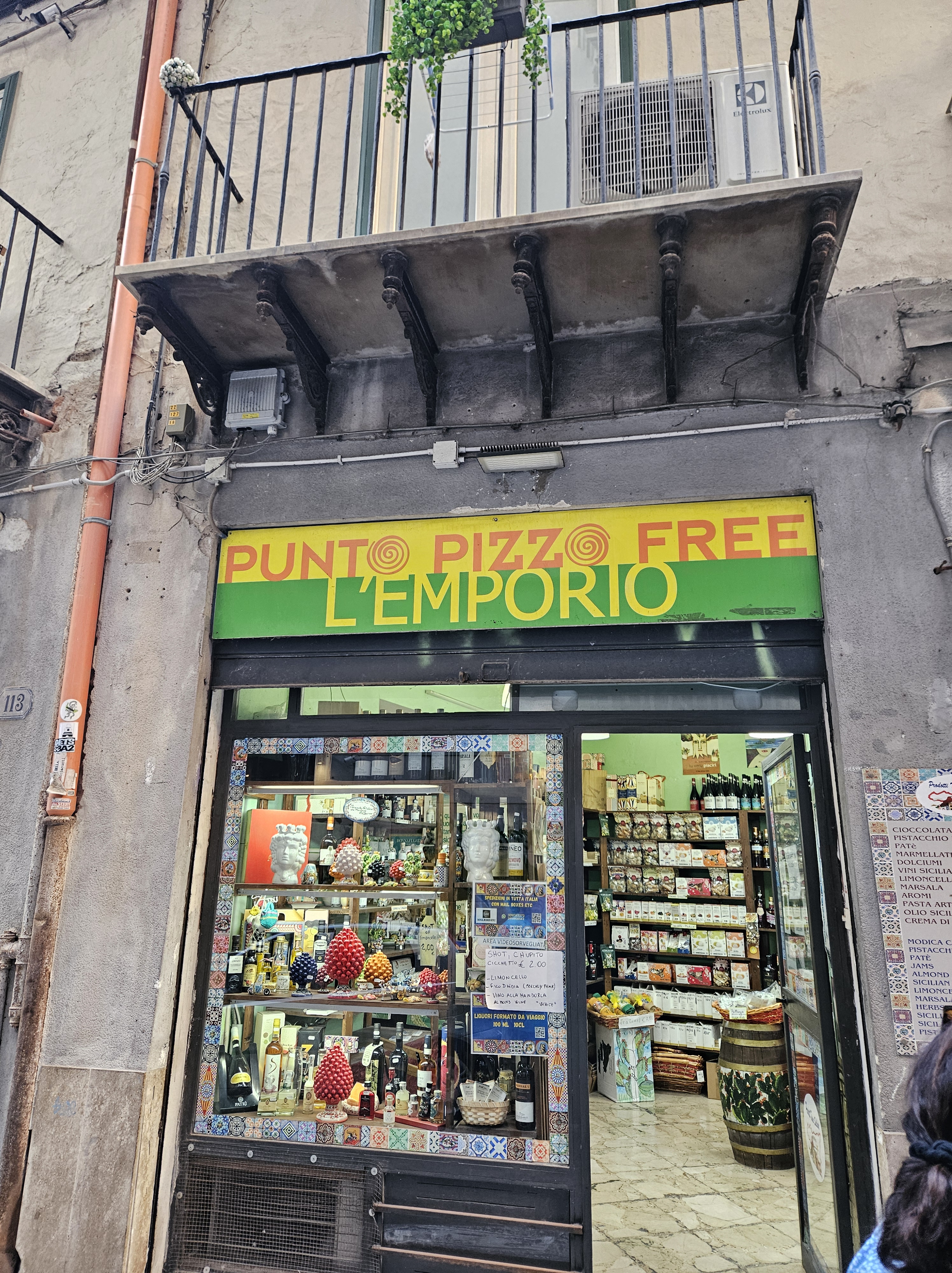
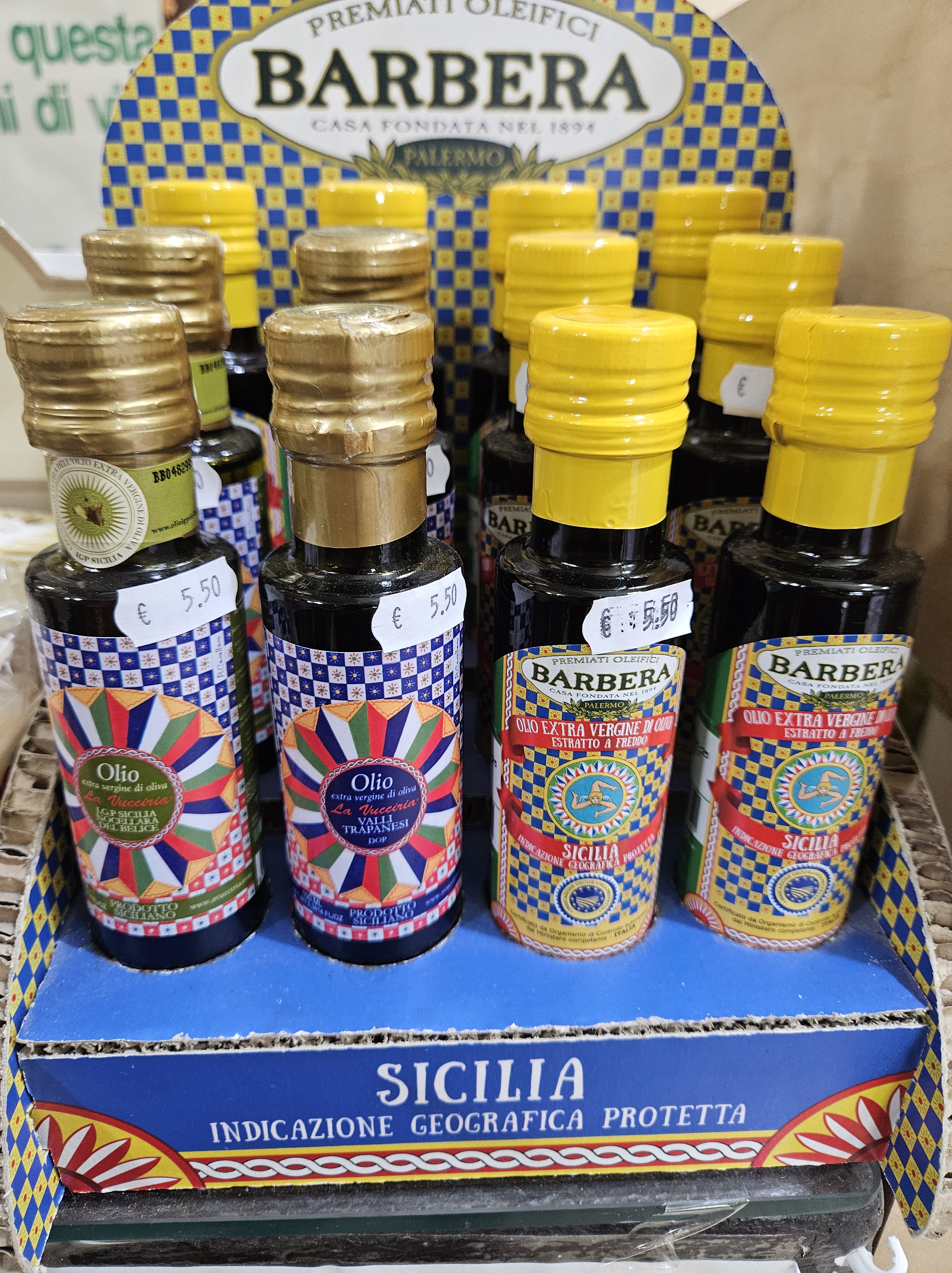
From there, we ate another Sicilian specialty, arancine (fried rice balls with cheese in the middle), panelle, which are fried chick pea fritters, and potato croquets. Then we went to a wine and liquor shop and did a quick taste of an orange liqueur, Arancello, after a classic Sicilian toast led by Lorenzo,



Next was a tasting at “Alcolisti per Passione,” a restaurant on a busy side street, in the middle of a whole slew of other restaurants. Everybody was out on a Sunday night enjoying the city. At the restaurant, there was an option to eat sausage and stigghola, which is basically lamb or goat intestines on a skewer. (Hard pass!) I opted for the sausage but a few of the group were brave and tried the other too. Cheers to that.


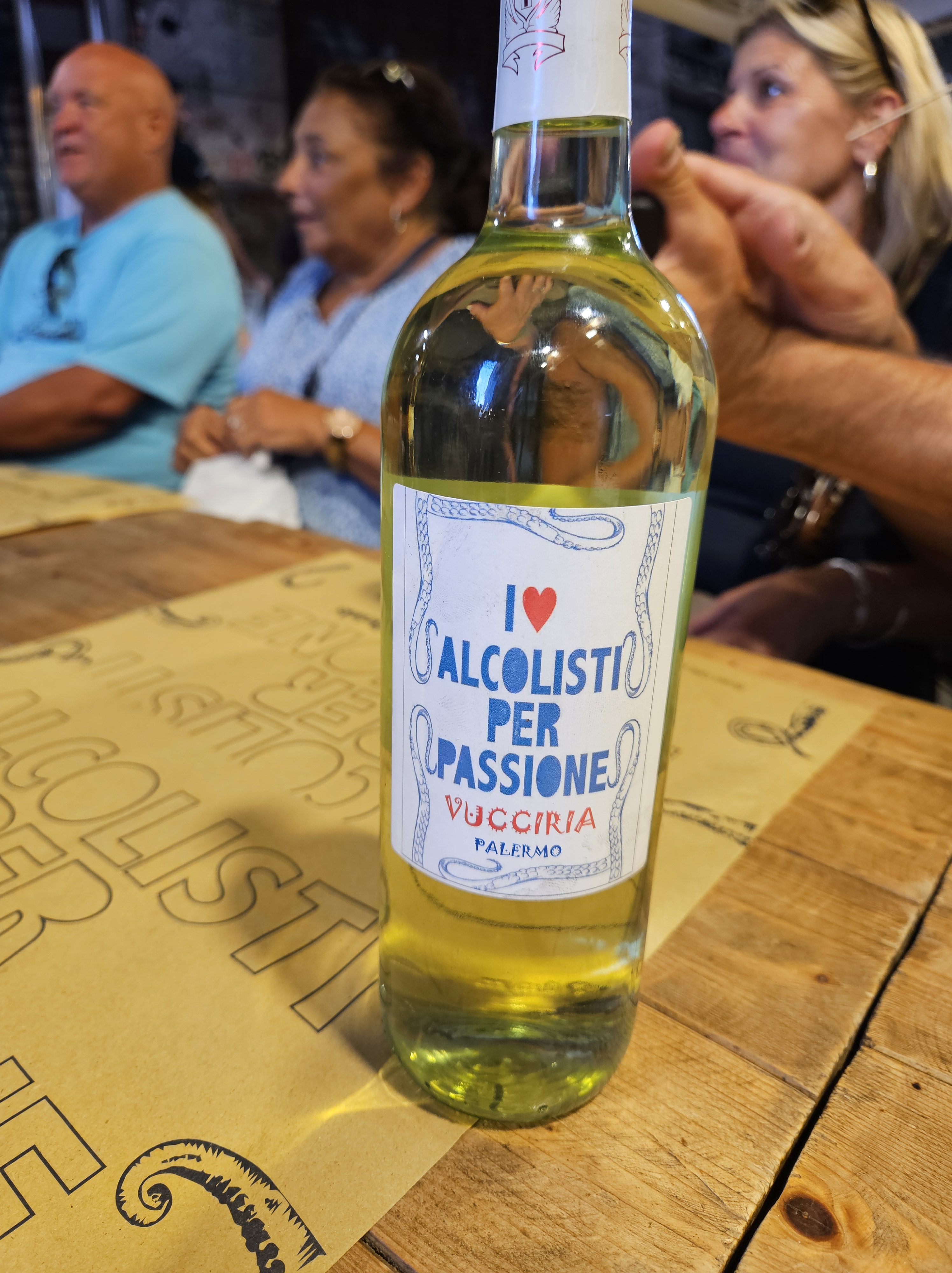
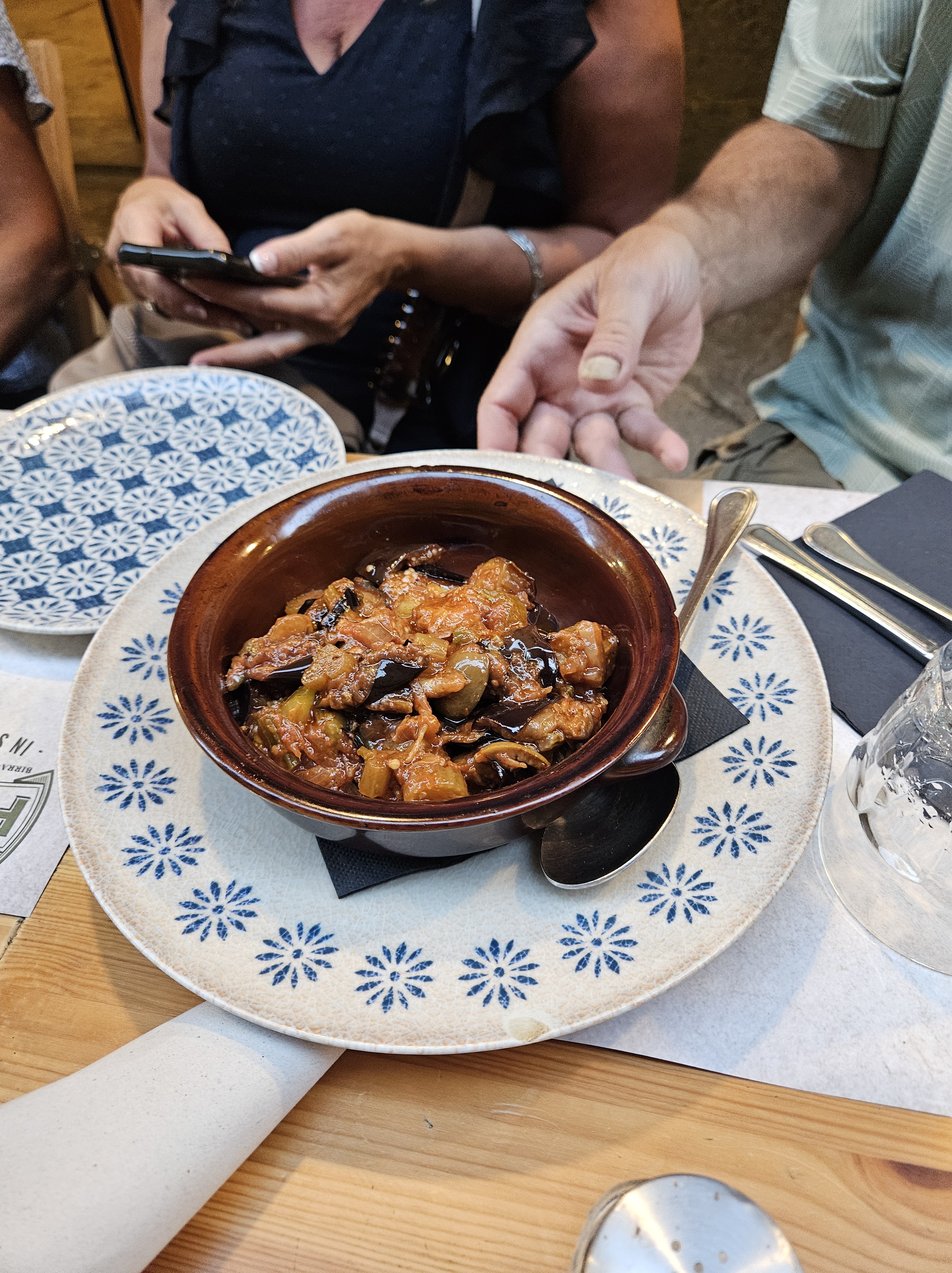


Then we moved on to the next place, Dadalia Osteria, one restaurant over. There we had the famous caponata, a sweet and sour dish made with eggplant, celery, tomatoes, olives and onions, and Pasta alla Norma, a pasta dish with eggplant. And I didn’t like either of them. I’m sure they were both very good. I just don’t like eggplant. Finally, after all the laughs and drinks, we said our farewells and called it a night.
I highly recommend food tours. They’re a great way to discover a place and hear local tales about the food and landmarks. There are so many companies now offering experiences like this. Lorenzo works here: https://www.secretfoodtours.com
And if the gang from Staten Island and LA are is reading this, “Hello! I hope you all enjoyed the rest of your Italy vacation.”
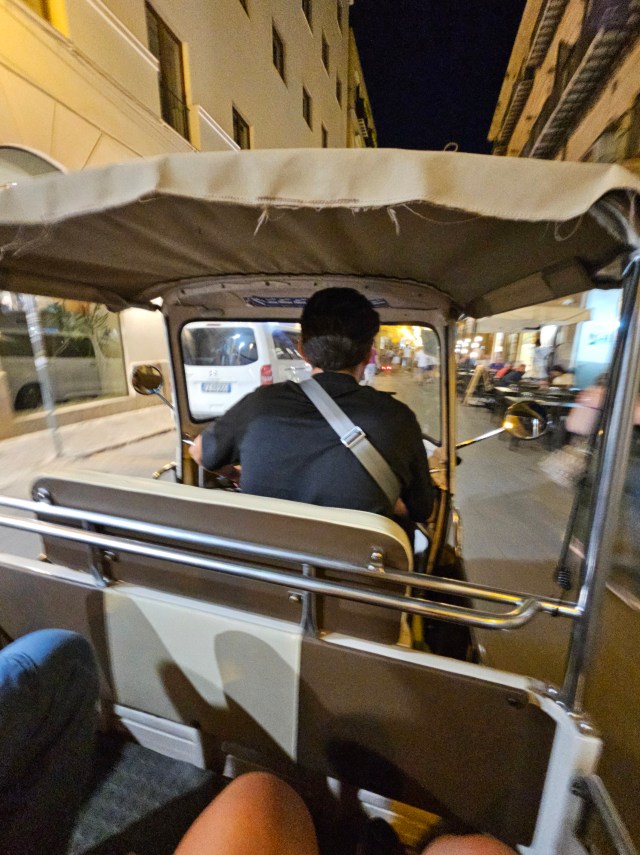
Since neither Paola nor I were really familiar with the neighborhood of the Casa, we opted to find a cab to take us back. We found instead a “lapa” (lah-pah), which is Sicilian for a three-wheeled truck called an “Ape” (ah-pay). The driver was waiting for a bride and groom but he cleared it with the wedding party and said he’d give us a lift. It was a bumpy ride and Paola and I laughed the whole way back. We were such tourists!
CHURCH OF GESU’ A CASA PROFESSA
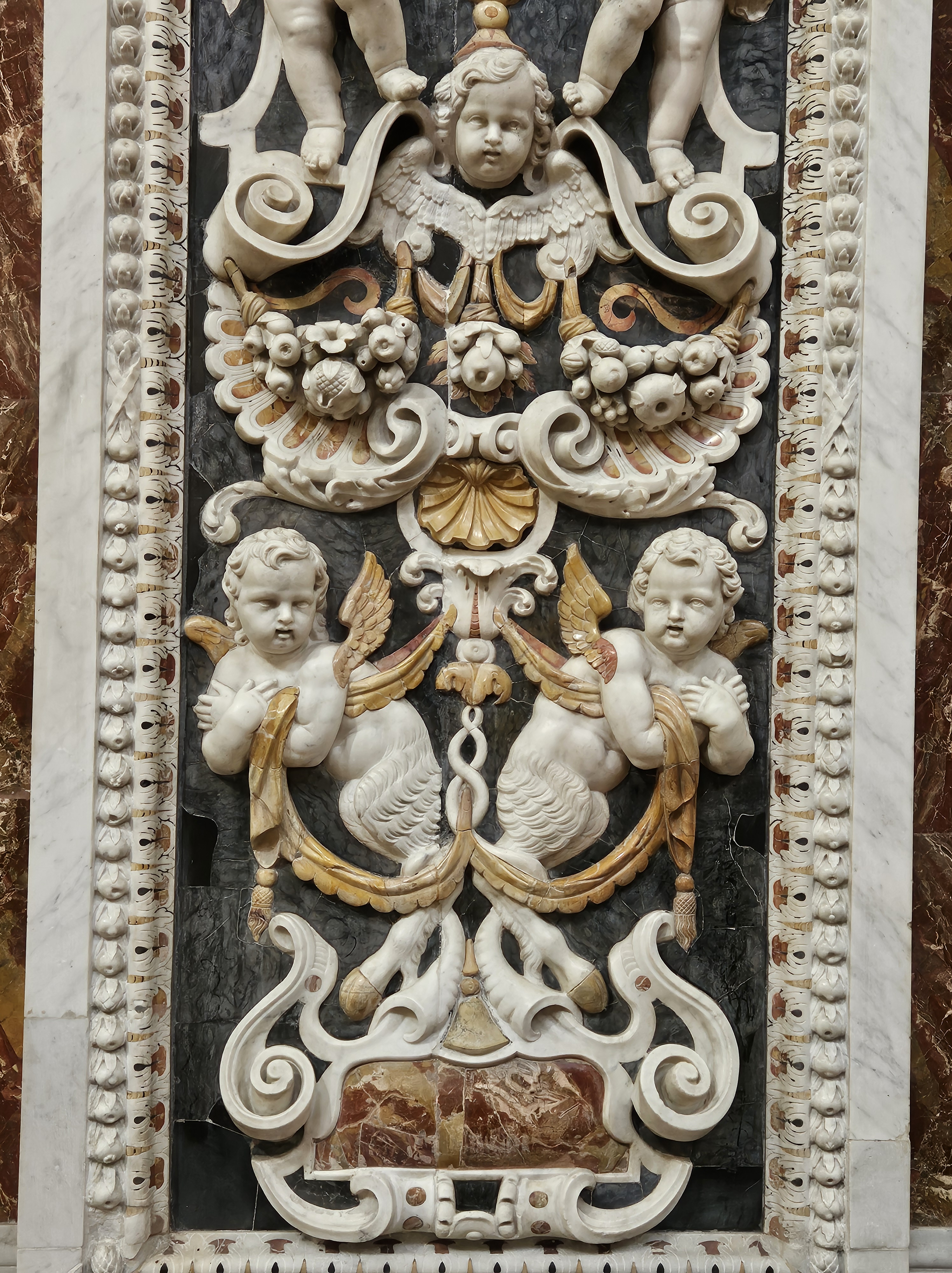
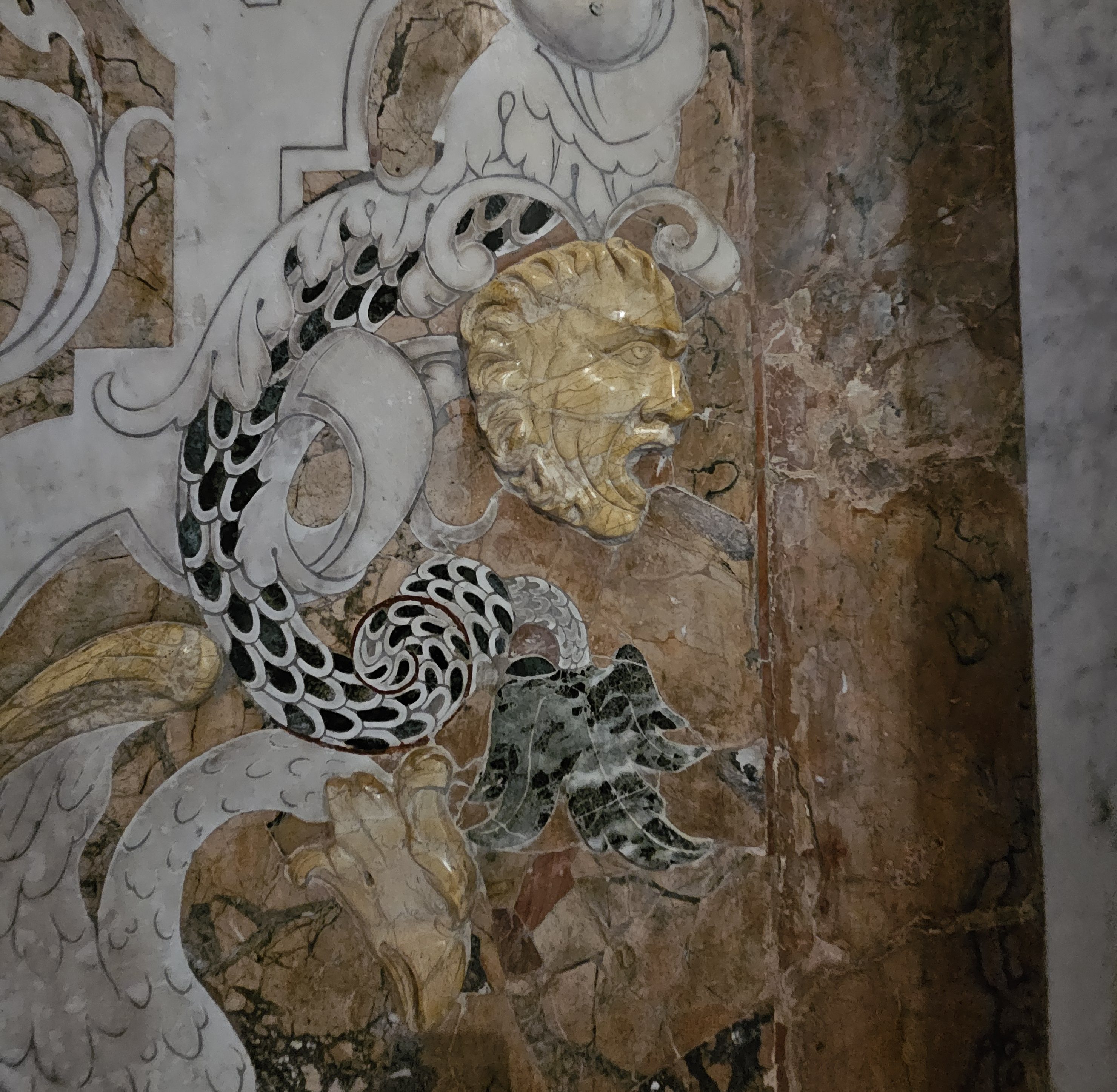
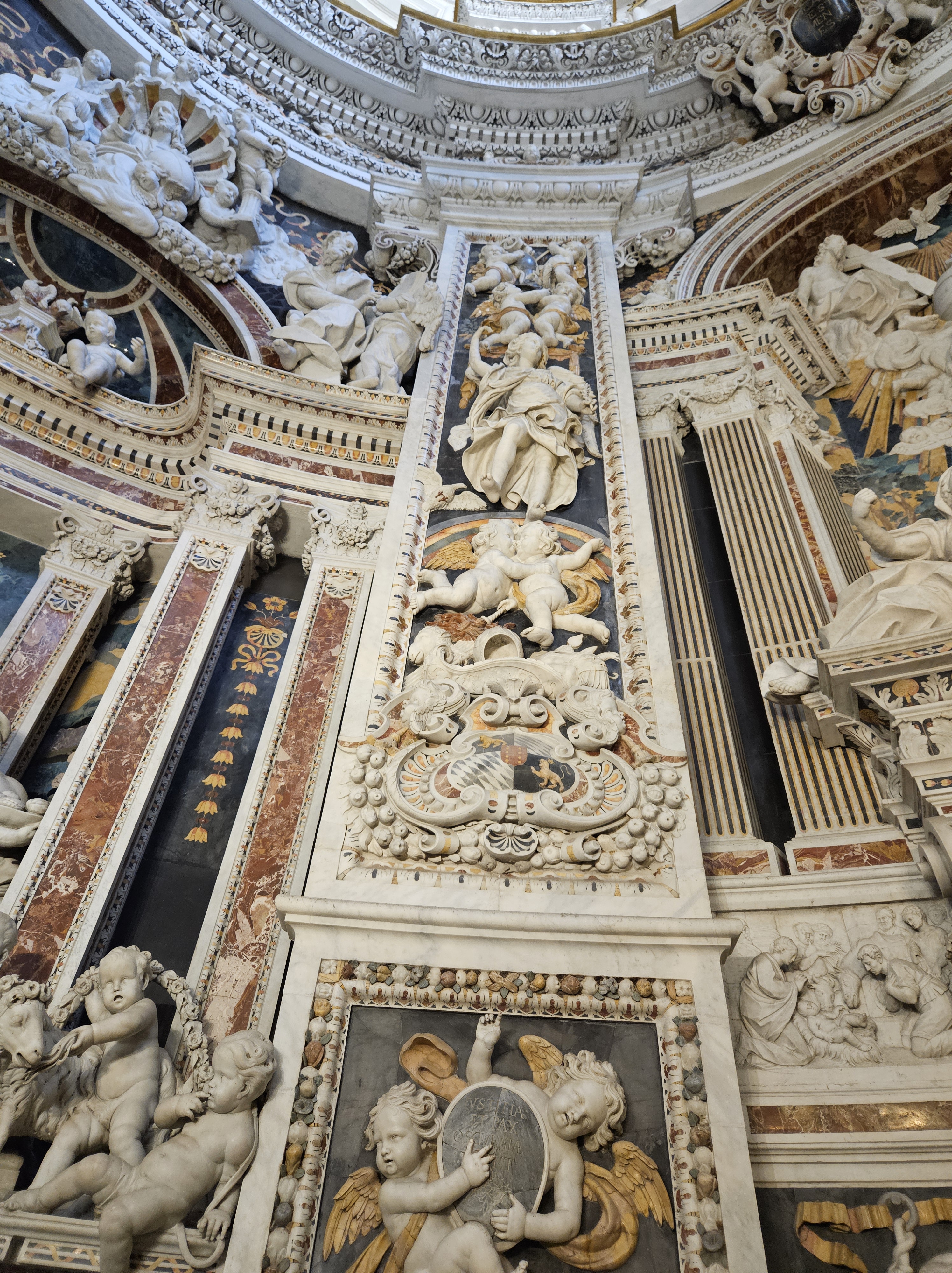
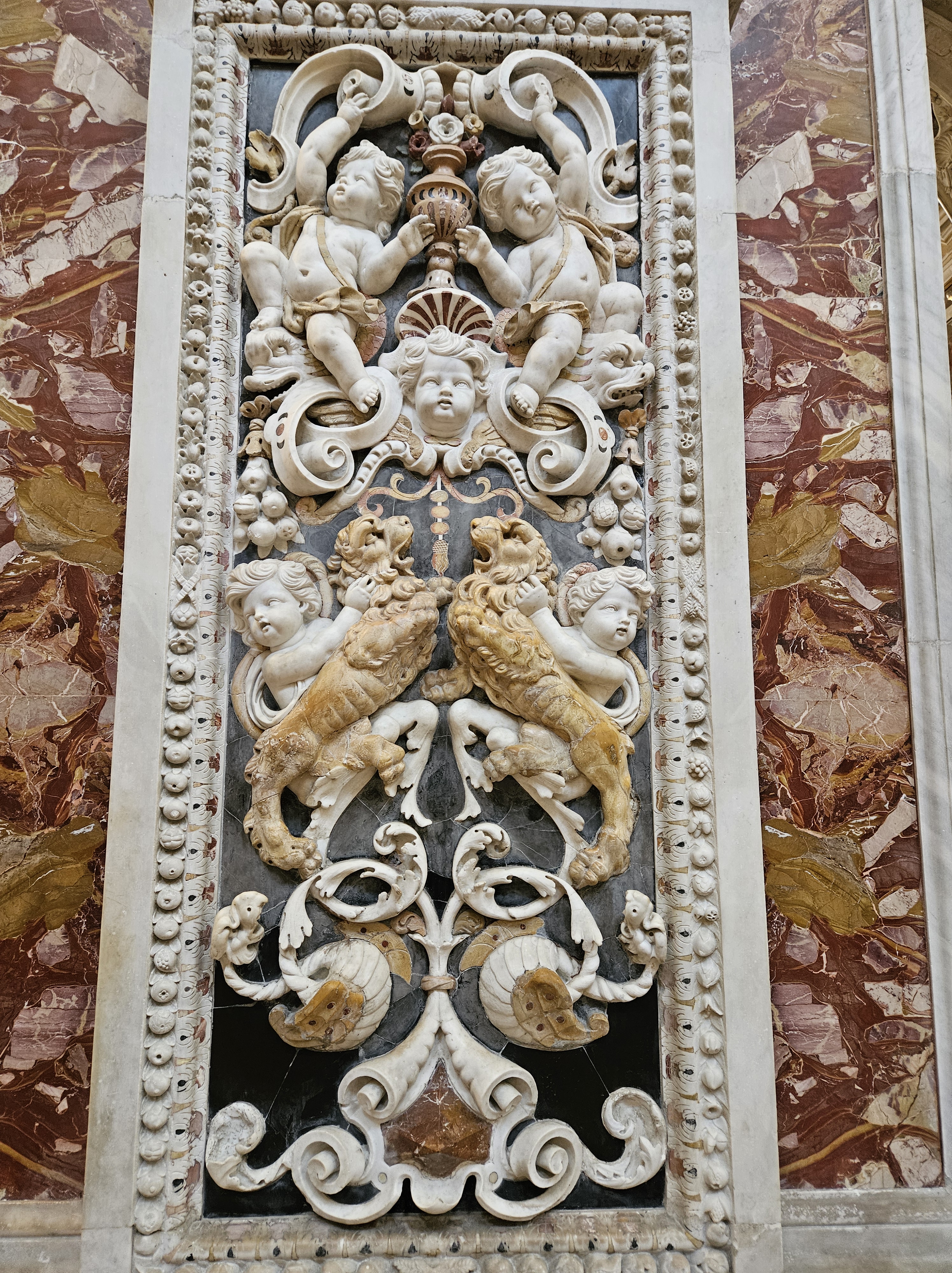
The next day was a big discover-Palermo day. Our first stop was the Church of Gesu’ A Casa Professa. It took my breath away. The gentleman out front selling the tickets said someone once fainted when they walked in. I was skeptical but the minute I went in, I understood. I’ve seen a lot of churches in Italy but none like this. The walls, the art, the apses were covered in marble sculptures. It was very particular and very interesting.

I simply could not get over the intensity of it, if that makes sense. I’ll let the photos do the talking.



PALERMO CATHEDRAL
Next up was Palermo’s cathedral. Now, being the seasoned Italy visitor that I am, I researched to see if, like many other churches in Italy, summer attire is forbidden, meaning no tank tops nor shorts. And I read several sites that said those are the rules so dress appropriately.
Did I mention it was a very hot day? So I wore leggings and brought a long-sleeved shirt to throw over my tank. I brought a pair of shorts to change into afterward. We arrive at the cathedral and, like its opera house counterpart, it’s massive. We go inside to get tickets to go up on the roof and all I see are people dressed like they’re going to the beach. Tank tops, flip flops, shorts on everybody. Apparently, the rules have changed.
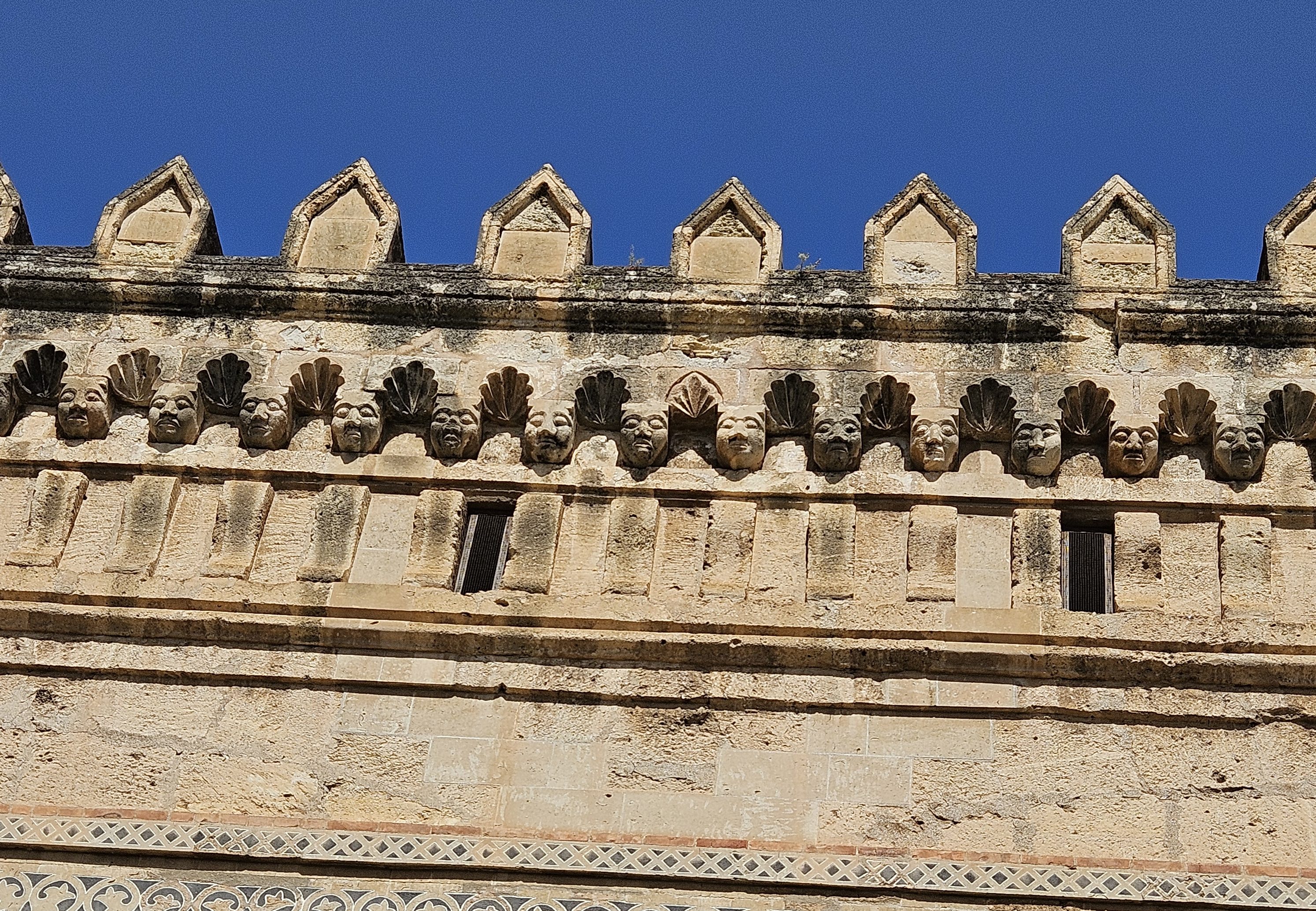
We walk in and I could not believe it: I was not impressed by anything. The walls were barren, no frescoes, really, and just not much else. I didn’t even take a photo. Paola said there have been so many changes and additions to it that there’s just nothing left to see. The outside, however, was pretty stunning. So we climbed up a cramped tower – I’m claustrophobic and was very glad that it was just 25 steps up – and enjoyed the view of the city from there.


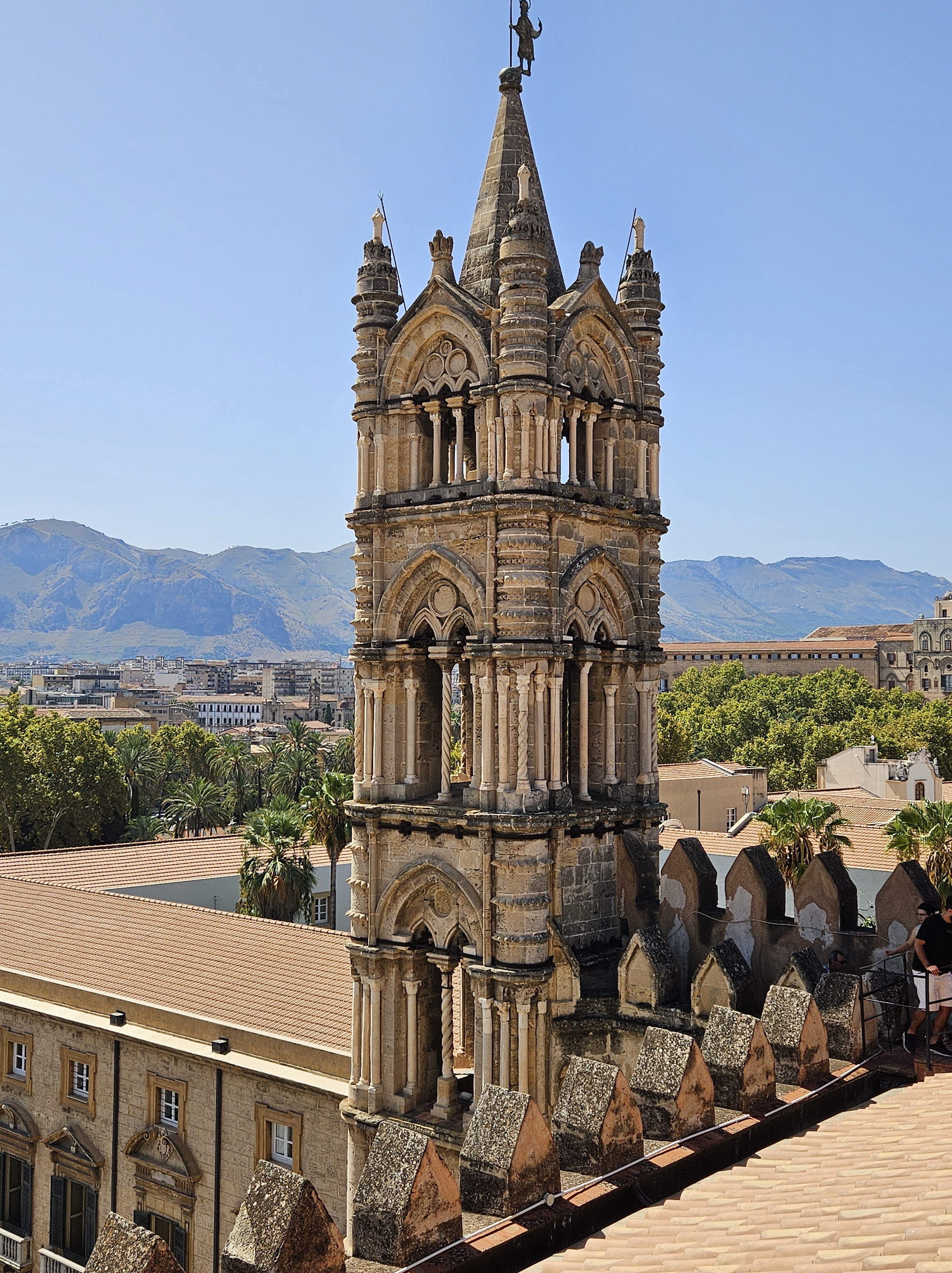

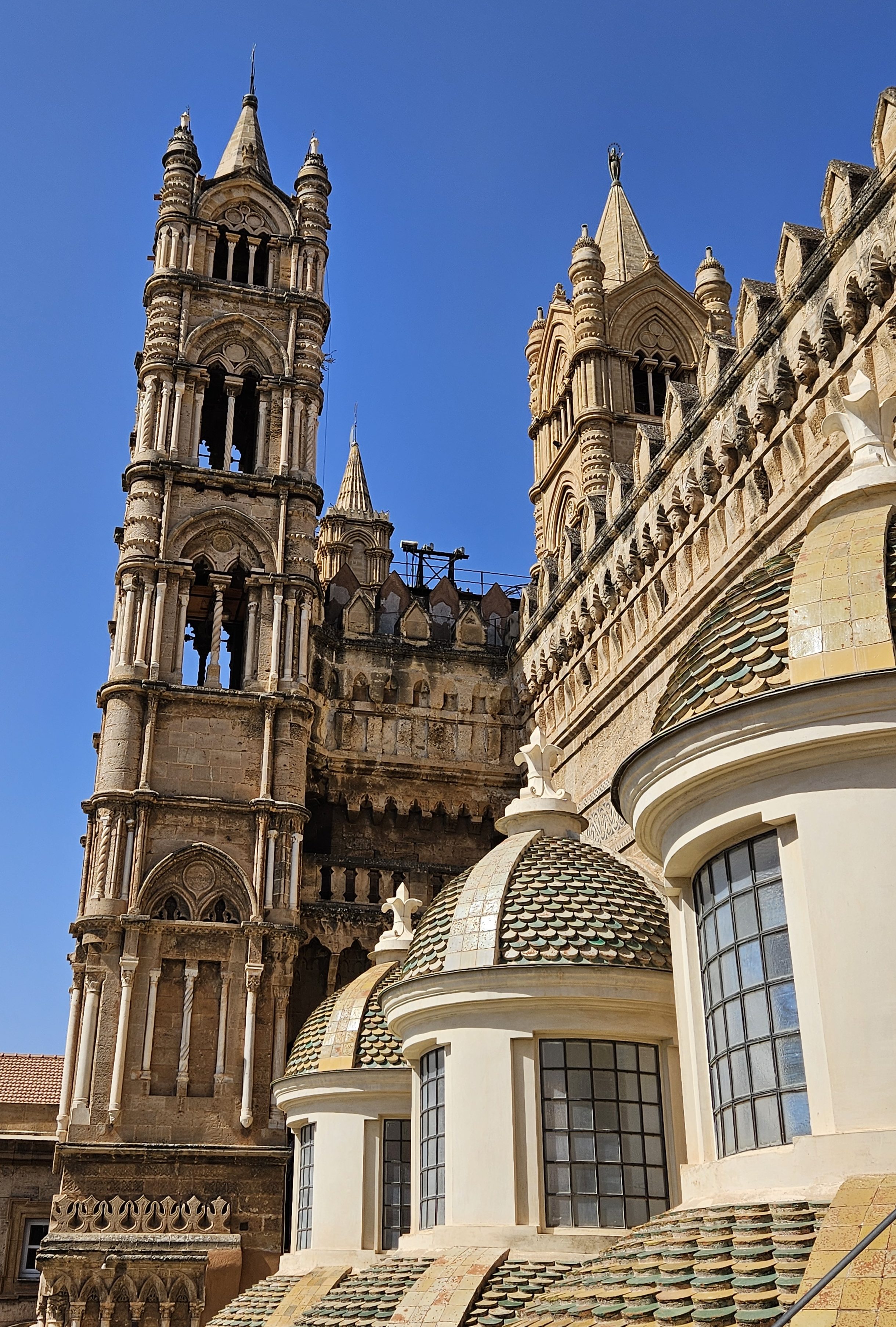
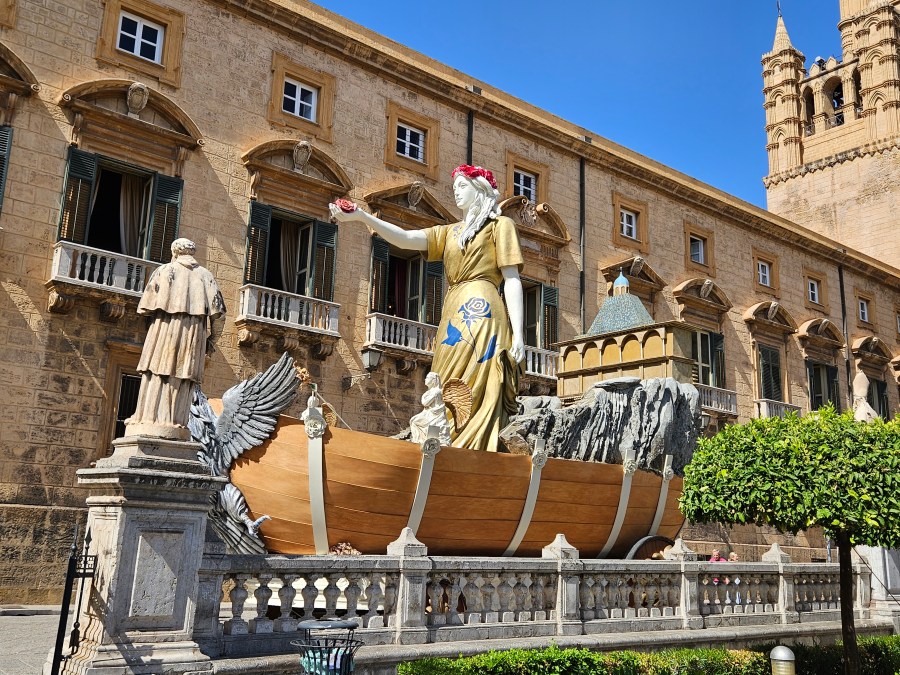
This was also during Palermo’s Santa Rosalia Festival, a celebration of the city’s patron saint. There was a very large sculpture of her on a ship outside the cathedral entrance. It looked even bigger from the roof looking down. So we ended on a good note, even though I was sweating bullets.



First thing I did once we got back down was change my clothes. We walked a bit more and found ourselves back in front of the opera house. Then we decided to do another tourist thing: hop on one of those sightseeing trains that take you to different parts of the city. But first I had to fend off an aggressive woman who wanted us to get on the tourist bus. I said “No thank you” three times, and she wasn’t having any of it and insisted, three times, that we take the bus. “We’re the same company,” she said. (I didn’t care). Finally, I had to be that person and raised my voice, “I don’t want to get on the bus!” That did it!
We ate a quick lunch and then got on the aforementioned train for a tour of some neighborhoods that we may not have seen otherwise. It was a nice, quick loop.
BALLARO’ MARKET
Then it was time for what turned out to be the second highlight of the day: the Ballaro’ Market. This is a historic open air market. To call it “lively,” would be an understatement. The vendors sing a lot, mostly to sell their wares. Not sure what they’re singing, but who cares? Meat, seafood, fruit, vegetables, arancine, sandwiches made of God knows what from the inside of a cow, beautiful ceramics and then. . . . cannoli. The cannoli I saw were not filled with ricotta. There’s no way. It was too hot. But I did eat one with a pistachio cream inside.
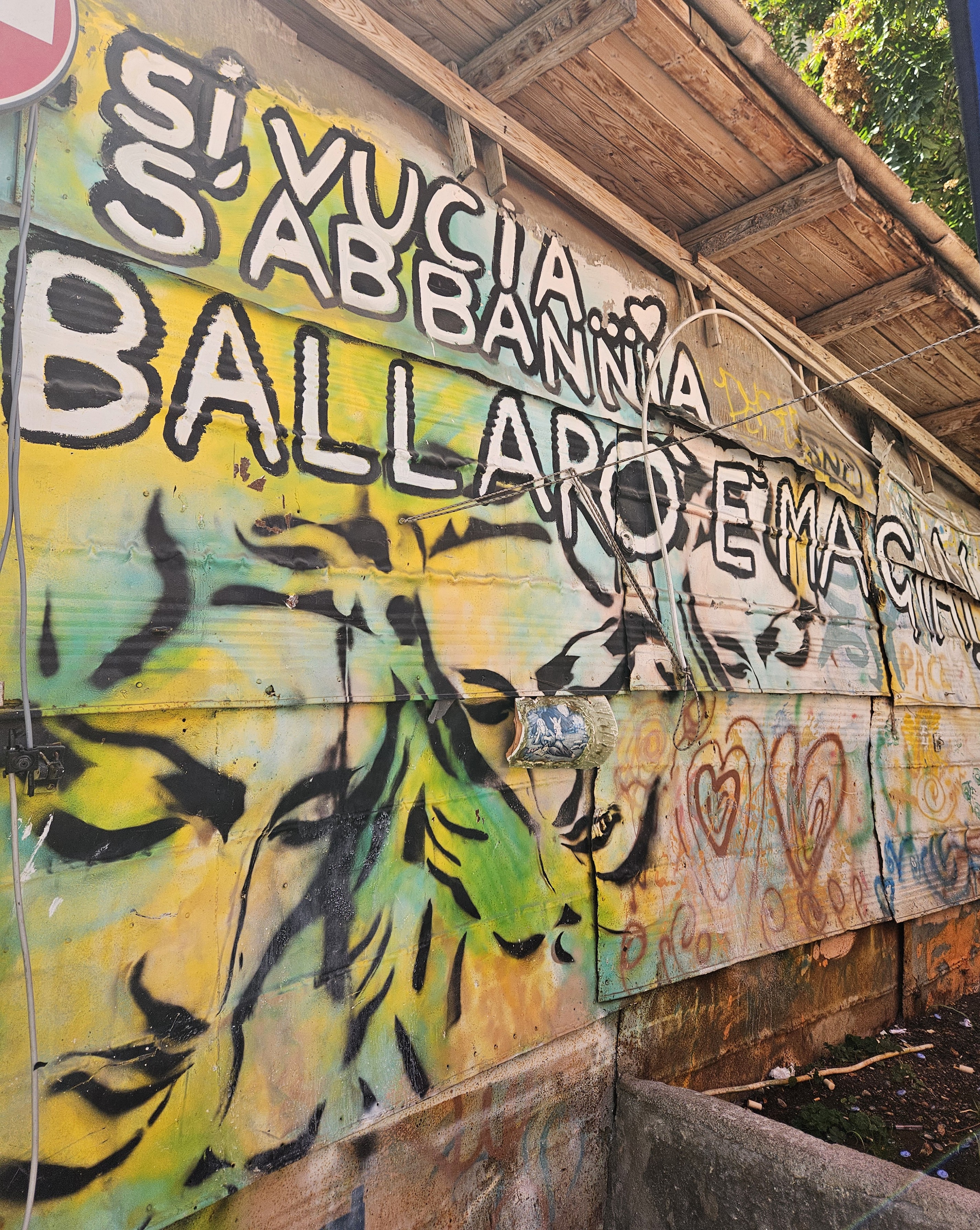

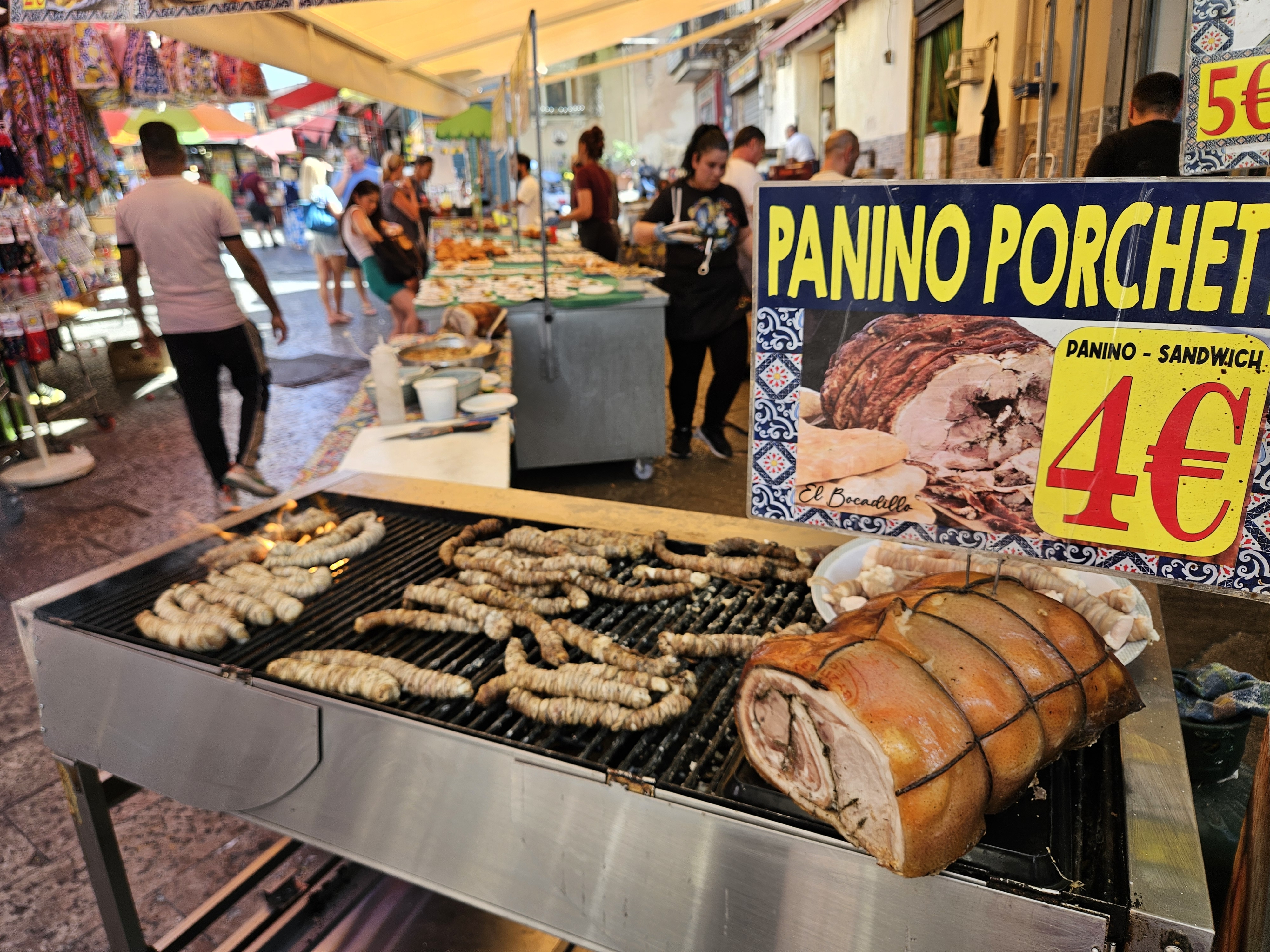


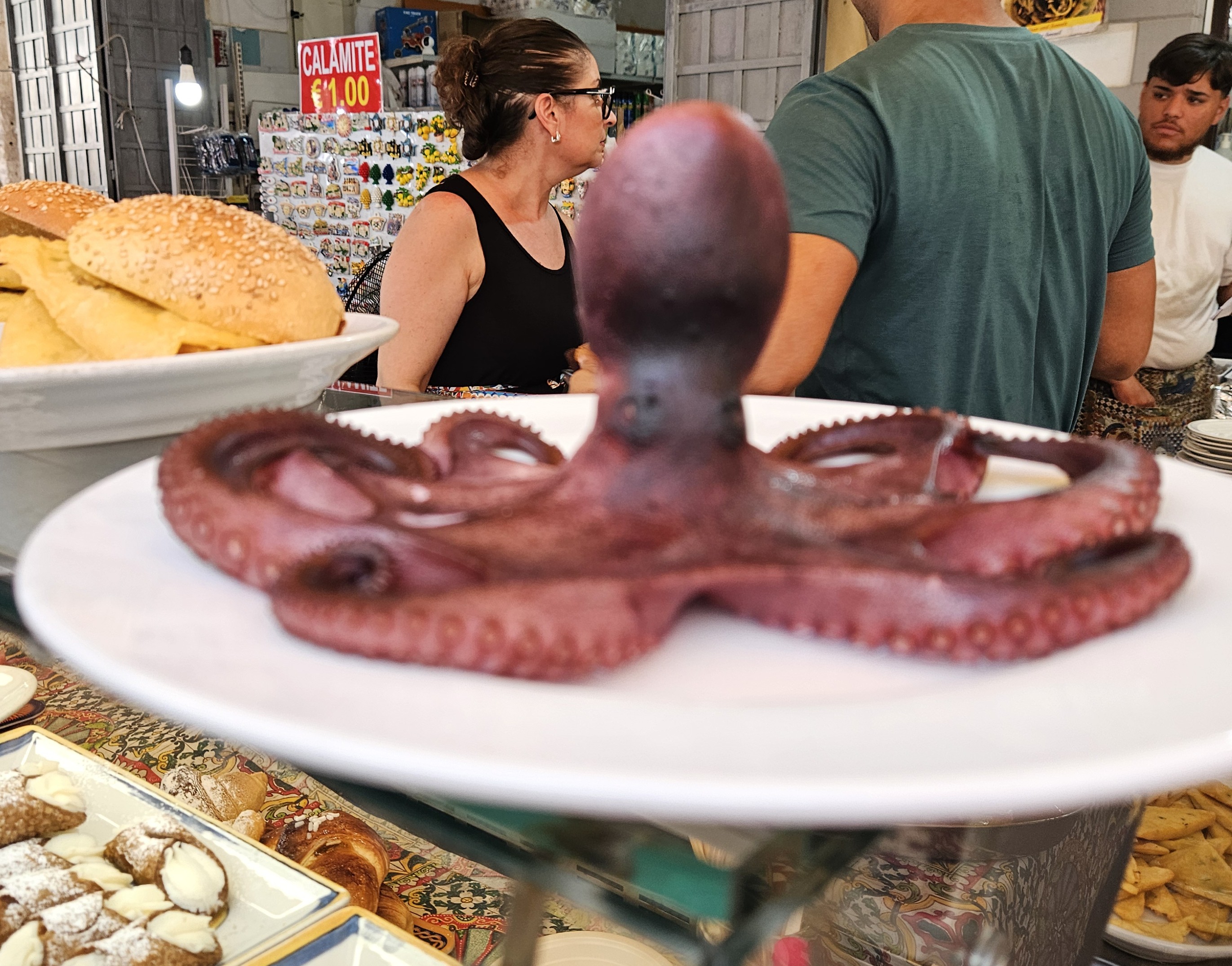
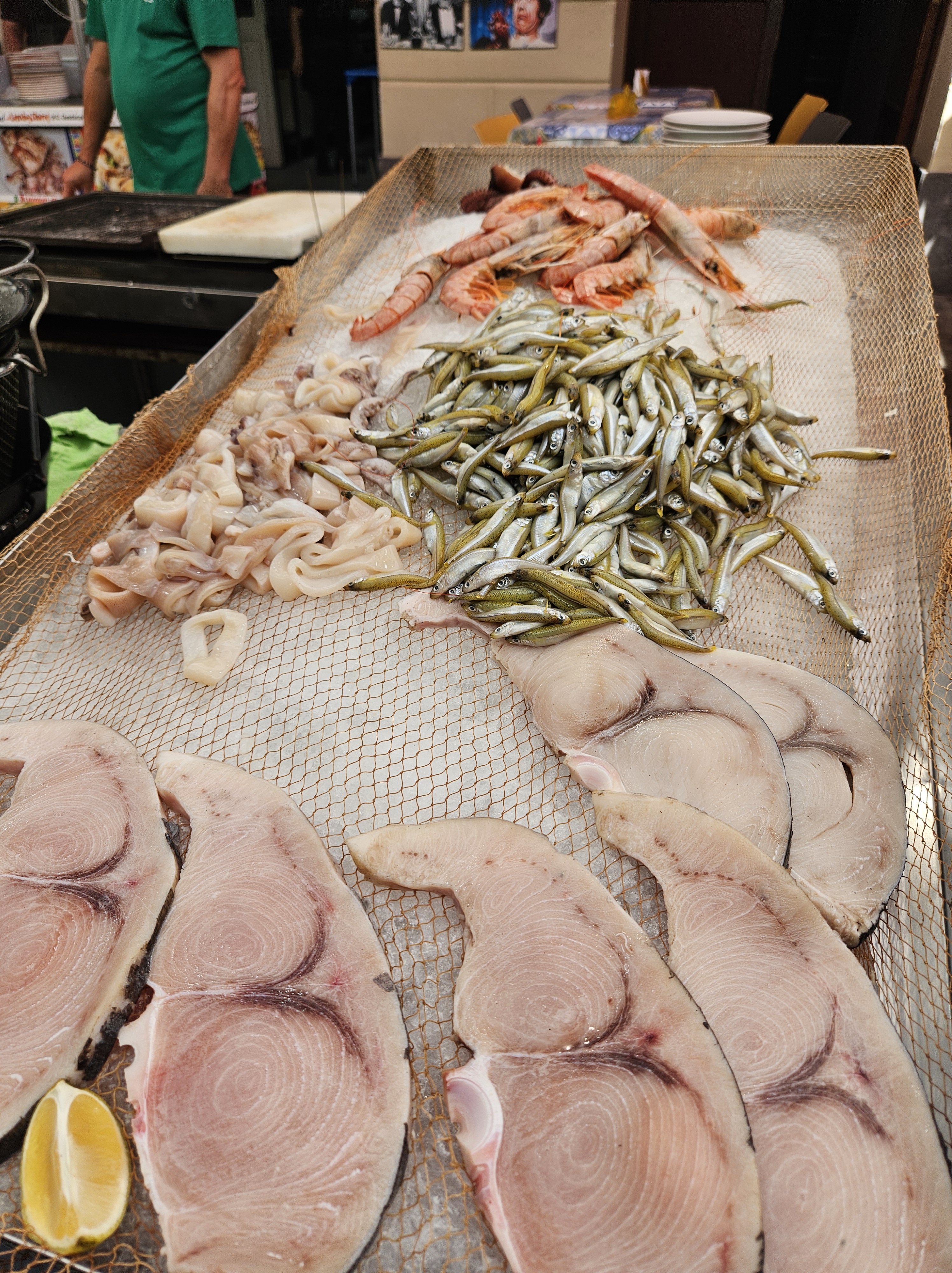
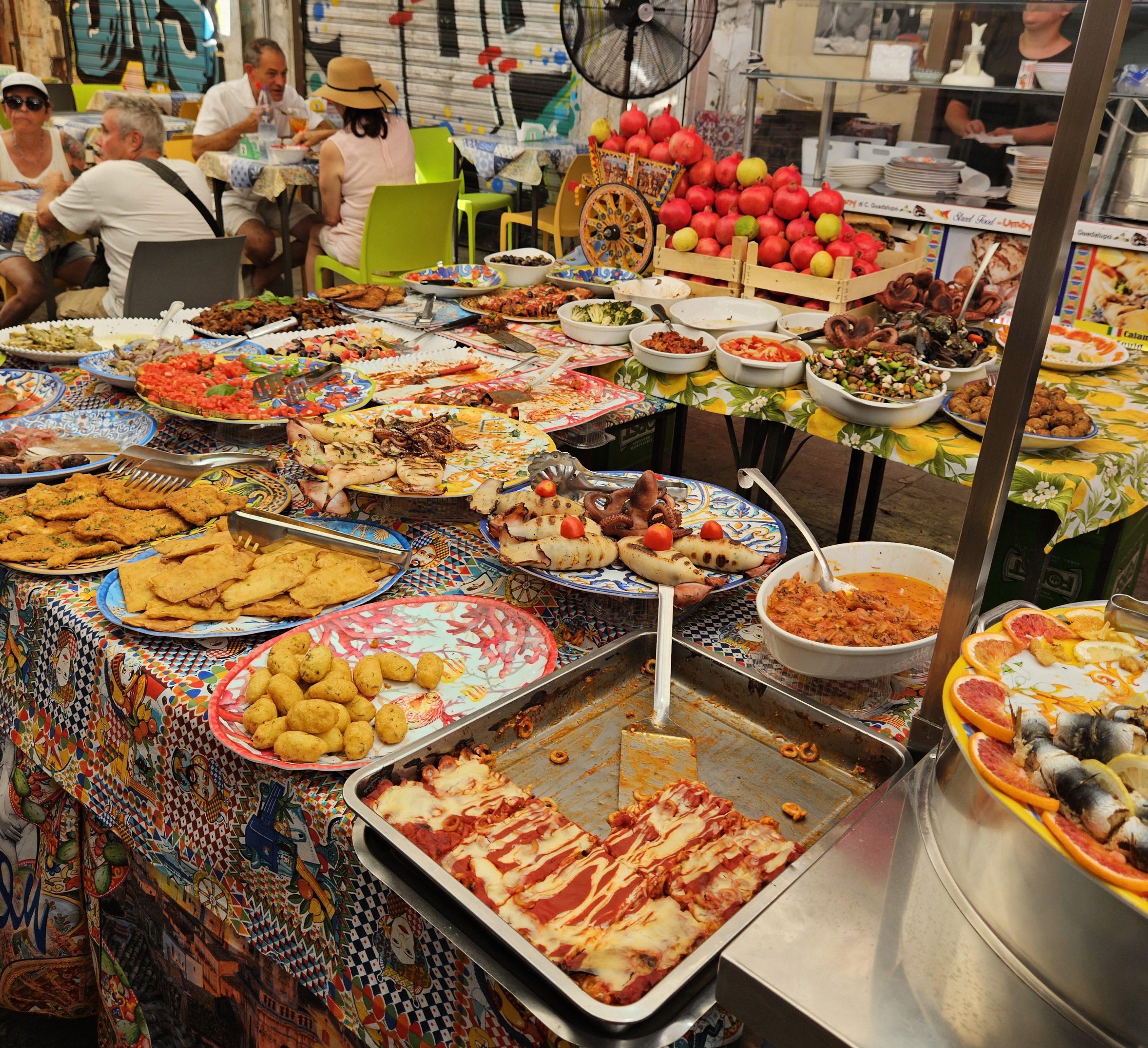


Going here is the quintessential Sicily experience: market, food and lots of noise. My cousin told me it had a reputation of being a dangerous place for tourists. I can see that. It was crowded and so it’s a pickpocket’s dream. But I felt safe the whole time.
We walked back to the Casa to rest for a bit and then met Paola’s friend, Mariangela, for dinner. First Mariangela took us to the Garibaldi Gardens, where there are these Ficus Magnoliodes trees. They’re also known as Moreton Bay fig trees. Whatever you call them, they’re unlike anything I’ve seen before. The roots are above ground.
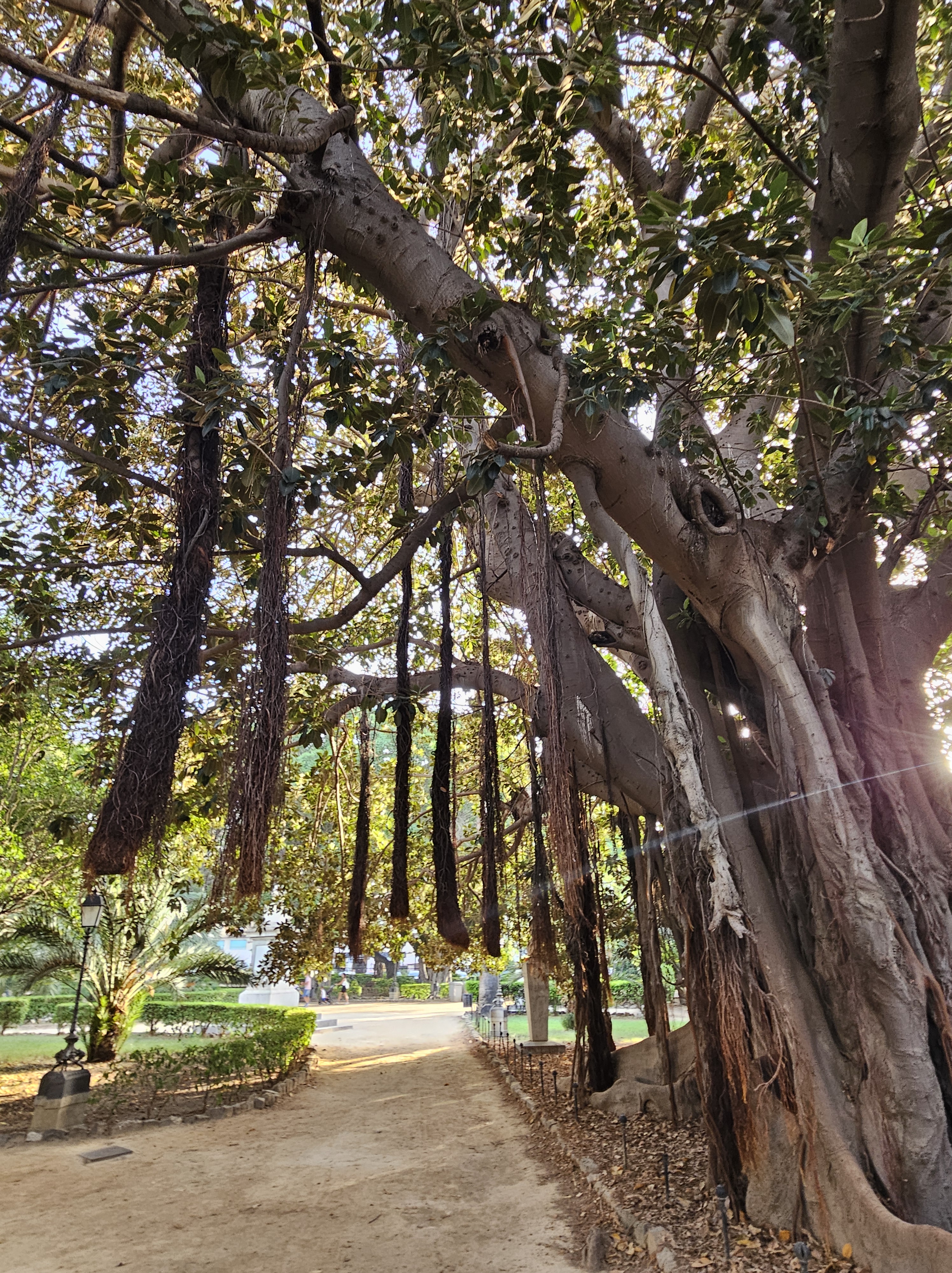
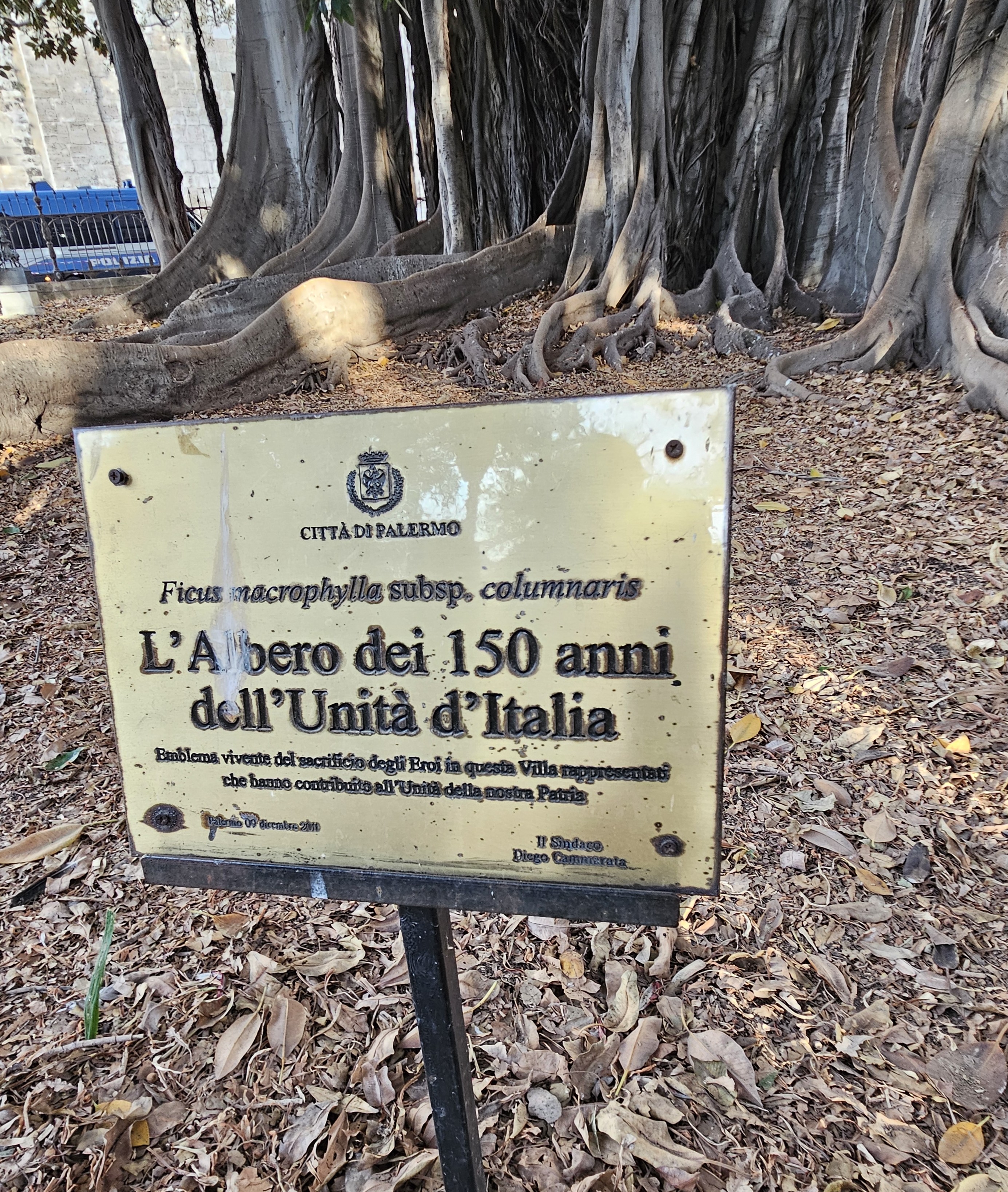
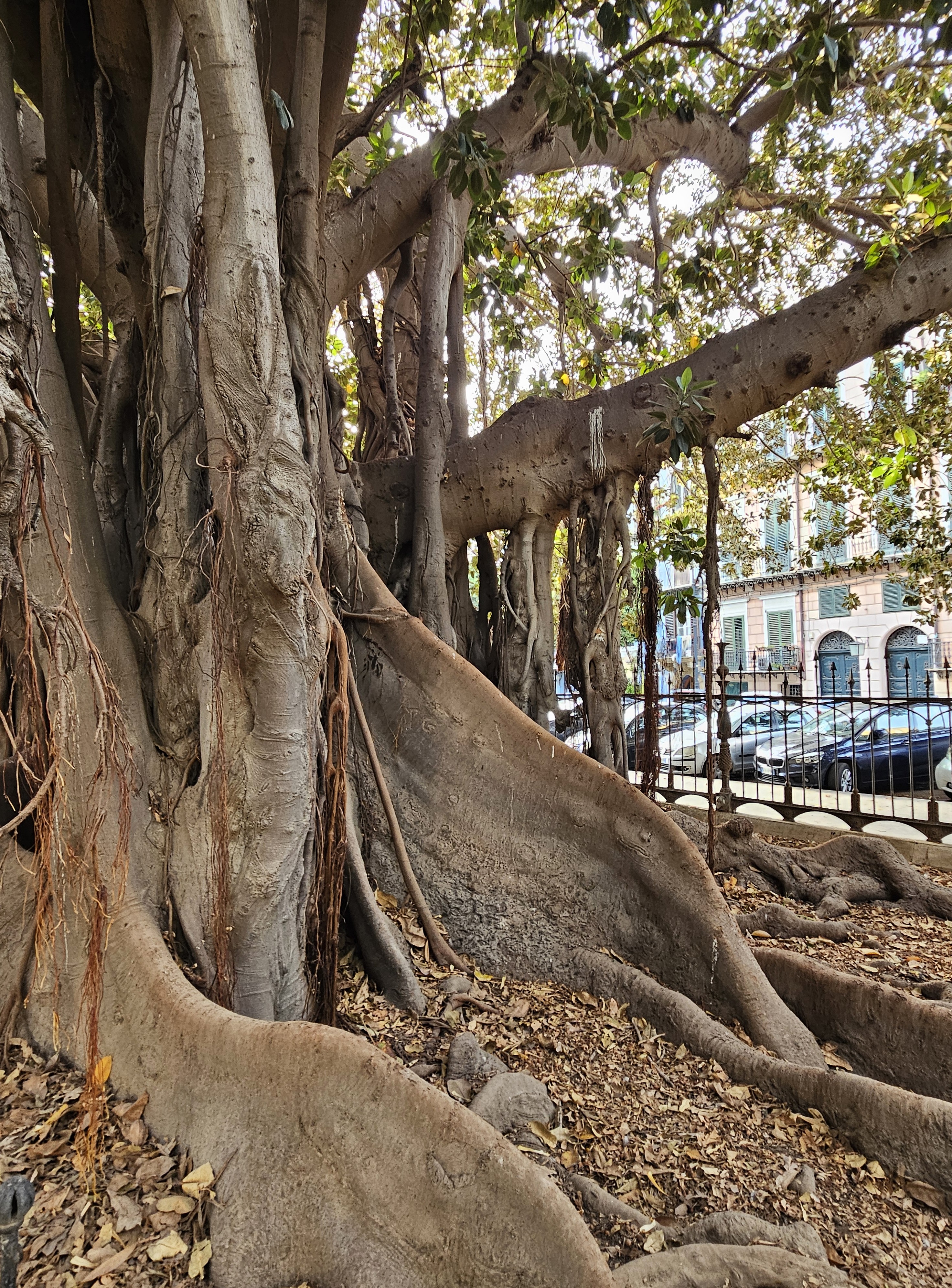
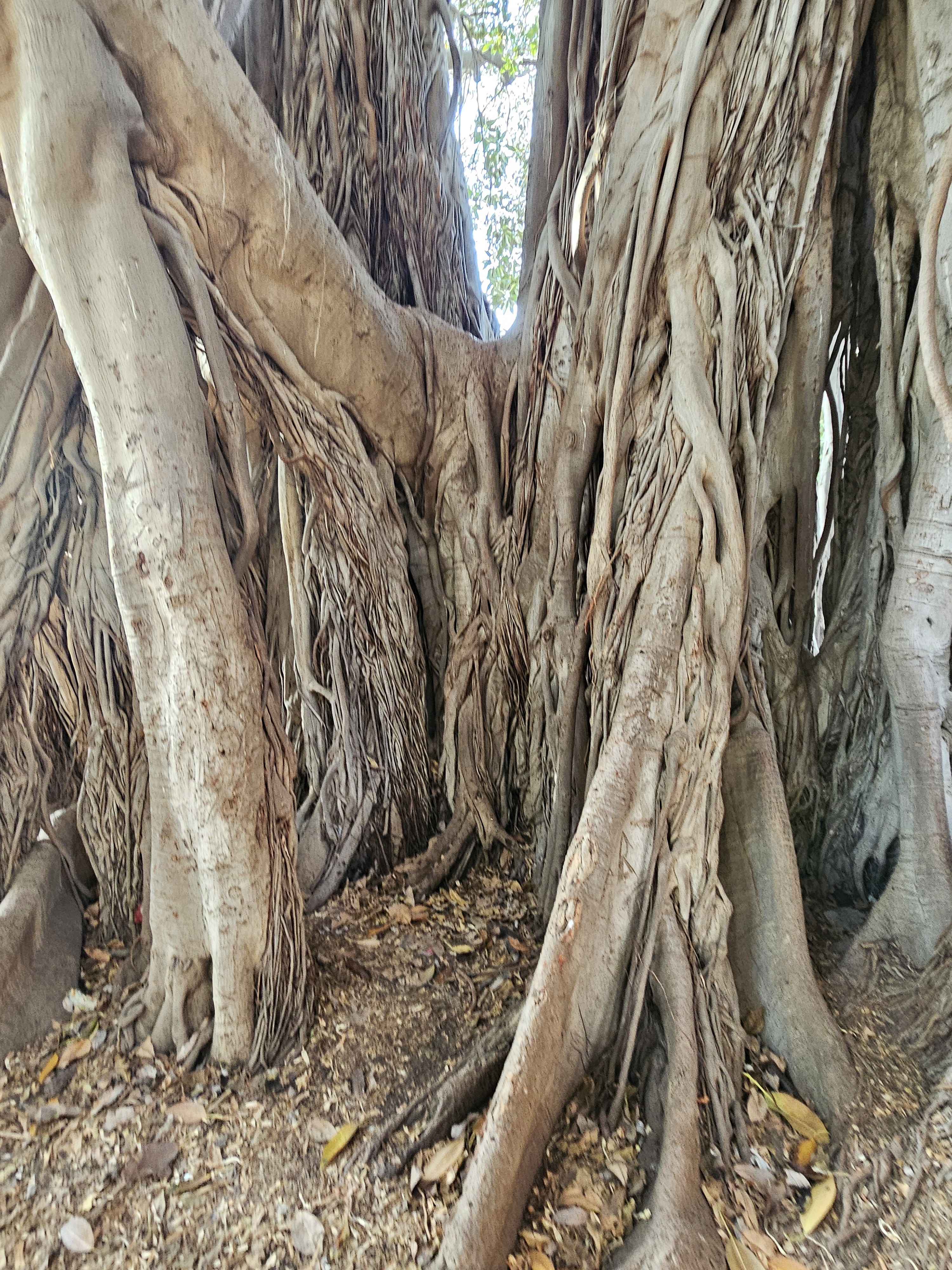
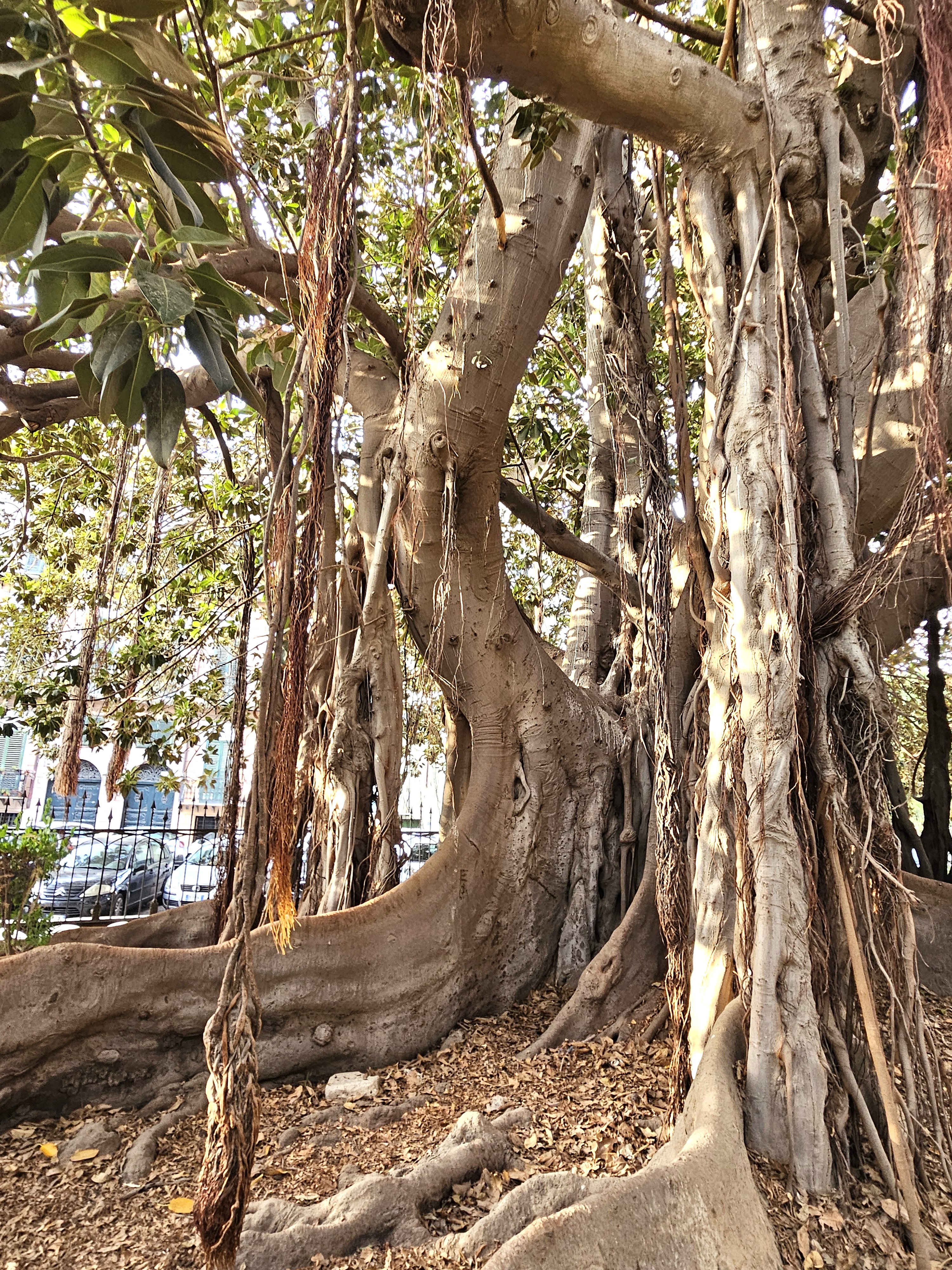

Then we strolled to the waterfront, where there is a big park and lots of people were jogging, walking, bike riding even dancing. This is not the image one ever gets of Palermo. We ate dinner at a seaside restaurant and enjoyed a lovely evening.

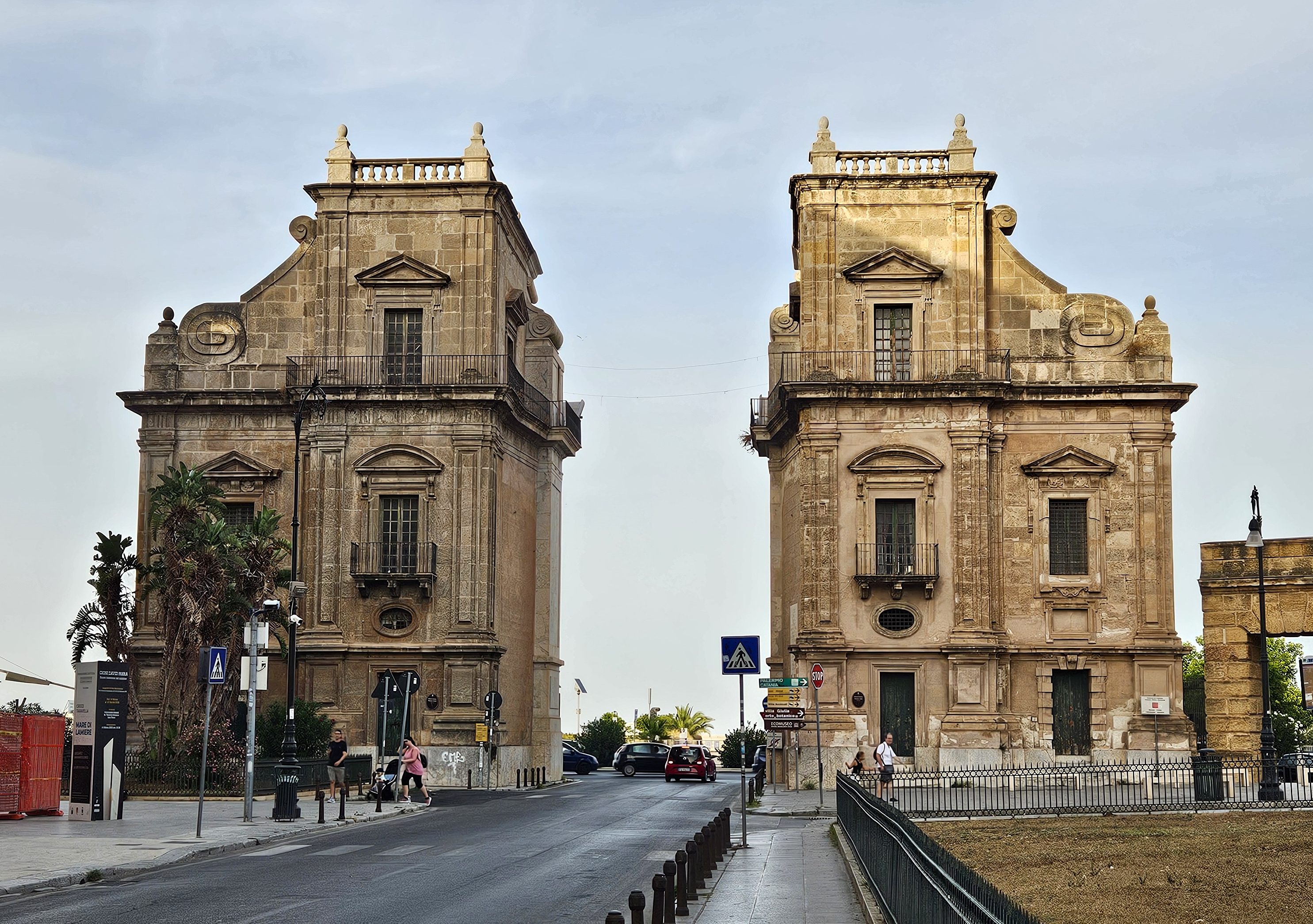


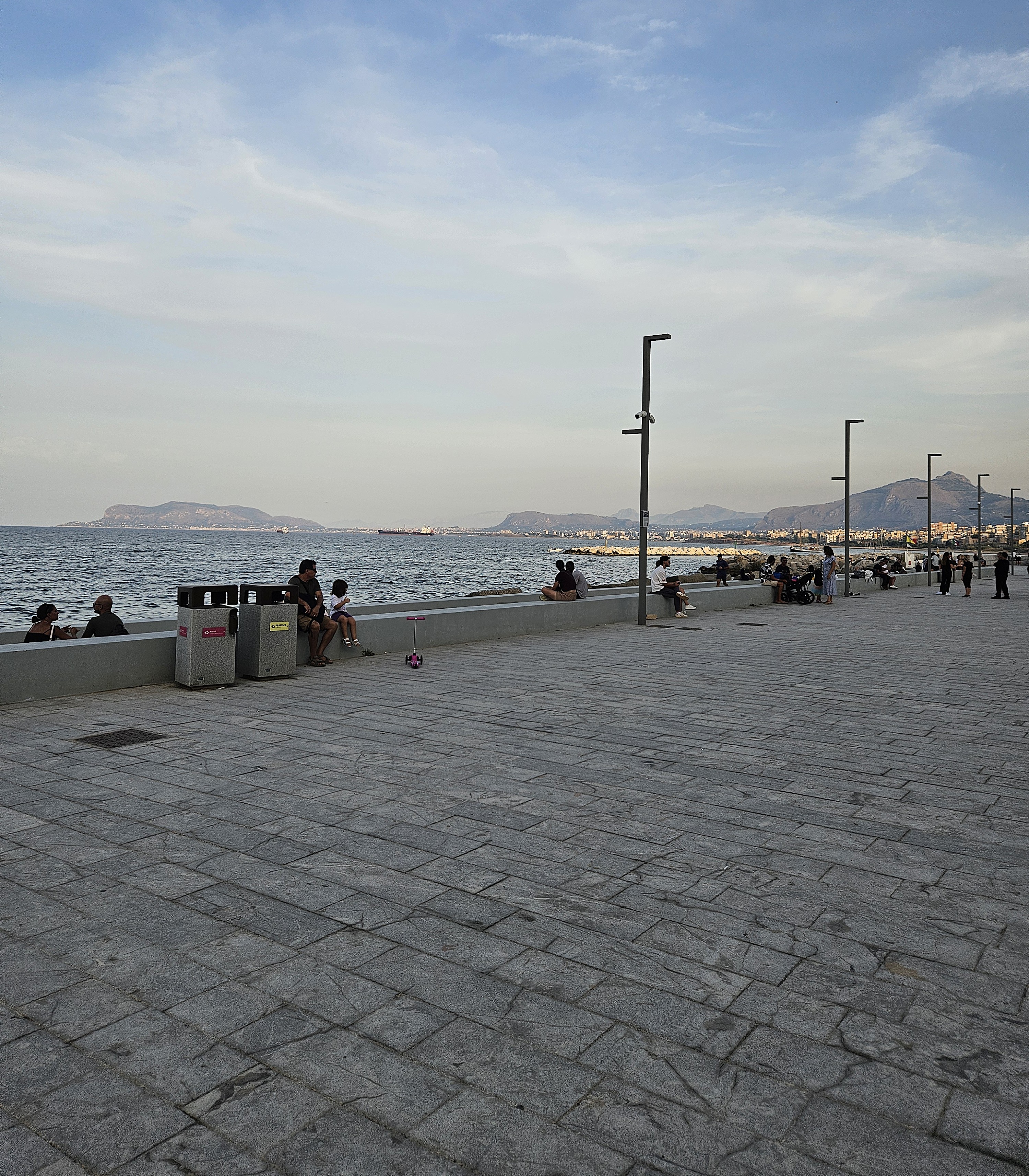

It was a great way to end the day. The next day Paola left for Bologna and I caught a train to Aragona, where my cousin Venera picked me up. The next three days I was with family in Grotte, the town where my mother was born.
Then I was off to the beach at Noto.
 1cannolo, 2cannoli
Another gre
LikeLike